

A weekly cleaning schedule sounds great until the sink is full, the bathroom mirror is spotted, and it’s only Tuesday. You may have tried a color-coded chart before, only to drop it by the second week when real life got in the way. The problem usually isn’t you. Most schedules assume long stretches of free time, and busy women rarely have those. This post walks you through a realistic version built on short tasks, small zones, and room to miss a day.
Why a Weekly Cleaning Schedule Works Better Than Cleaning When You Can
Cleaning “whenever you get to it” sounds flexible. In practice, it means you decide what to clean, and when, every single day. That constant deciding is tiring all by itself. A weekly cleaning schedule takes the decision away. On Wednesday, you already know it’s bedrooms, so you don’t have to look around the house and wonder what’s most urgent.
Spreading the work across the week also keeps each task small. Wiping a bathroom counter takes a few minutes. Letting it go for two weeks can turn it into a full scrubbing session. Small, regular jobs tend to stay small.
A schedule only works if it’s honest about your life. If you work all day and then handle dinner, homework, and bedtime, a ninety-minute cleaning block isn’t realistic. Fifteen minutes is. That’s the target throughout this post: about fifteen minutes a day, with a lighter weekend. For most small or average-sized homes, that’s enough to keep things comfortable and livable.
Build Your Weekly Cleaning Schedule in Seven Simple Steps
Work through these steps in order, or jump to the one you need most. You don’t need to do all seven this week. Start with whichever one feels easiest and build from there.
Step 1: Pick Your Cleaning Days and Keep Each One Short
Choose how many days you can realistically clean. Most busy weeks have room for four or five short sessions, not seven. Look for the days that already feel a little lighter, like the evening you’re home early or the morning your schedule loosens up.
Set a limit of fifteen minutes per session and use a timer on your phone. When it goes off, you stop, even if the room isn’t finished. Stopping on purpose is what makes a routine sustainable. You come back tomorrow instead of dreading the next round, and that matters more than finishing every task in one sitting.
Step 2: Start Each Day With a Quick Reset
Before any zone cleaning, do a quick reset. Put dishes in the dishwasher, clear the surfaces, send shoes and bags back to their spots, and collect stray cups and mail. A cleared surface is much easier to wipe than a covered one, so this small step makes every other task faster.
If you want a model for this, the 15-minute home reset shows how little time a reset can take. Try doing it at the end of the day, when everyone is home and the mess is freshest. You’ll wake up to a kitchen that feels ready for the morning.
Step 3: Give Each Day One Small Zone

Instead of cleaning the whole house, give each day a single zone. Monday could be the kitchen, Tuesday the bathroom, Wednesday the bedrooms, Thursday the living room and floors, and Friday the laundry. One zone means one decision, and you’re never standing in the middle of the house wondering where to begin.
If your home has a spot I haven’t named, like an entryway or a corner of a home office, swap it in. The only rule is to keep each zone small enough to finish in about fifteen minutes. If a zone feels too big, split it in two and give each half its own day.
Step 4: Write a Short Checklist for Each Zone
A zone only feels quick when you know exactly what’s in it. For the kitchen, that might be wiping the counters, wiping the stovetop, cleaning the sink, and taking out the trash. Keep each list to four or five tasks, and tape it inside a cabinet door so you don’t have to think.
I test my own systems the simple way: if Daniel can follow one without a lecture from me, it goes on the blog, and if he rolls his eyes, I go back and simplify. Short lists keep the whole weekly cleaning schedule realistic, and they work for the rest of the family too, not just for you. If you’d like a head start, the free The 7-Day Home Reset Checklist gives you a printable place to begin before you build your own.
Step 5: Use the Cleaning Supplies You Already Have
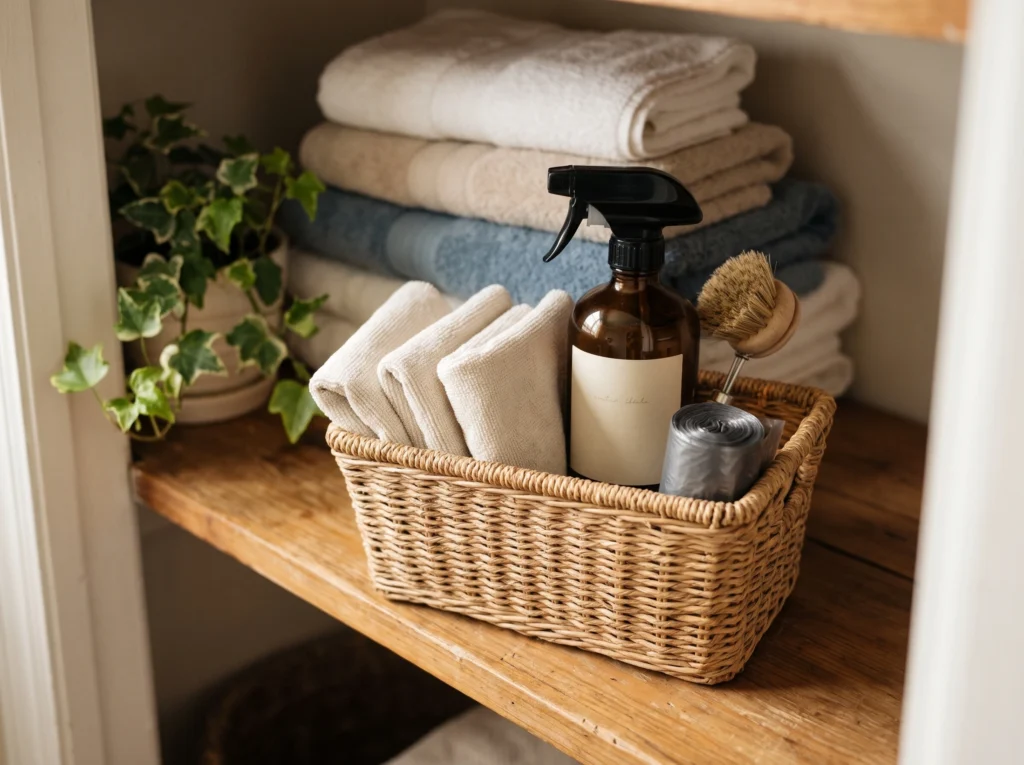
You don’t need a cart full of specialty products. A basic setup is usually enough: an all-purpose cleaner, a few microfiber cloths, a scrub brush, trash bags, and a vacuum or broom. Keep them together in a small caddy under the sink or on a closet shelf so you can grab it and go.
A surprising number of cleaning minutes disappear while hunting for the spray bottle. When a supply runs out, replace it, but don’t buy anything new just because a schedule seems to demand it. Declutter first and buy storage last applies to cleaning gear too. If the caddy is already full, you have what you need.
Step 6: Keep the Weekend Light and Flexible

Weekends tempt us to catch up on everything at once. Try the opposite. Use Saturday as a flexible slot: finish whatever you skipped during the week, or do nothing at all. Use Sunday for a short setup for the week ahead, like a quick tidy of the entryway and a glance at the calendar.
Rest is part of a good weekly cleaning schedule. A home that gets a breather is easier to keep up, and so are you. If the weekend fills up with plans, that’s fine too. The schedule is there to support your life, not compete with it.
Step 7: Plan for the Messy Week
Some weeks fall apart. Someone gets sick, work runs late, or a school project takes over the kitchen table. Decide ahead of time what you’ll do when that happens. A simple rule works well: on a messy week, do only the daily reset and one small task a day, such as the dishes, the trash, or a single load of laundry.
When the week ends, start fresh on Monday without trying to make up for what you missed. Skipped tasks don’t need to be repaid with a marathon. If you want more guidance for those fresh starts, The Home Organization Reset walks you through decluttering and room-by-room routines, step by step.
A Sample Weekly Cleaning Schedule for a Small or Average-Sized Home
Here is how those steps can look in a real week. Adjust the days to match your own routine. This weekly cleaning schedule is a starting point, not a rulebook, so change anything that doesn’t fit.
- Monday, kitchen: counters, stovetop, sink, trash
- Tuesday, bathroom: mirror, sink, toilet, a quick floor wipe
- Wednesday, bedrooms: make the beds, clear the nightstands, pick up the floor
- Thursday, living room and floors: tidy surfaces, vacuum or sweep
- Friday, laundry and entryway: finish a load, reset shoes and bags
- Saturday, flexible catch-up: finish what you skipped, or rest
- Sunday, light reset: quick tidy and a look at the week ahead
Every day also starts or ends with the quick reset from Step 2. If a day gets skipped, simply move on to the next one.
Weekly Cleaning Schedule Questions Busy Women Ask
How long should a weekly cleaning schedule take each day?
A weekly cleaning schedule works best when each day takes about fifteen minutes, plus a short daily reset. That’s enough to keep up with the basics in most small or average-sized homes. If fifteen minutes feels like too much right now, start with ten. A shorter routine you keep doing beats a longer one you abandon.
What if I miss a day or a whole week?
Skip it and move on. Doubling up the next day usually turns a manageable fifteen minutes into a chore you’ll want to avoid. If you miss several days, do the daily reset, pick the zone that bothers you most, and restart from there. Nothing about a missed day means you’ve failed. It just means life happened.
Can my family help with the cleaning schedule?
Yes, and it often helps the schedule last. Keep each task short and clear, and give every person jobs that fit their age and abilities. A short checklist taped where everyone can see it works better than a long conversation about who forgot what. Let people choose their tasks when you can, because people tend to follow through on jobs they picked themselves.
Keep It Simple From Here
You don’t need to start the whole week on Monday. Pick one zone, set a fifteen-minute timer, and try it once. Your weekly cleaning schedule can grow from there, one small spot at a time. Take what helps from this post and leave the rest. There’s no pressure here, and a home that works for you is the only goal.







6 thoughts on “A Realistic Weekly Cleaning Schedule for Busy Women”