Kids toy storage gets complicated fast when the living room is also where you watch TV, fold laundry, and step on a plastic dinosaur in your socks. You tidy up at night, and by the next afternoon the floor looks like a toy aisle again. It’s easy to assume you need a bigger room or a whole new set of furniture to fix it. You don’t. A few small, low-cost changes can give every toy a home and give your living room its calm back.
Sort First, Because Kids Toy Storage Can’t Fix Too Many Toys
Before you pick a single bin, take ten minutes to sort. Gather every toy in the living room and make three piles: keep here, keep somewhere else, and let go. Broken toys, puzzles missing pieces, and anything nobody has touched in months are usually easy calls. Bath toys and art supplies can head to the rooms where they’re actually used.
What’s left is what your living room really has to hold, and that’s the whole point. Kids toy storage works best when it’s sized for the toys you have, not the toys you’ve been tripping over. If sorting with little ones feels tense, this guide on how to declutter kids’ toys without tears takes it step by step. The rule I keep coming back to is declutter first, buy storage last, since it saves both money and floor space.
1. Give Toys One Zone Instead of the Whole Room
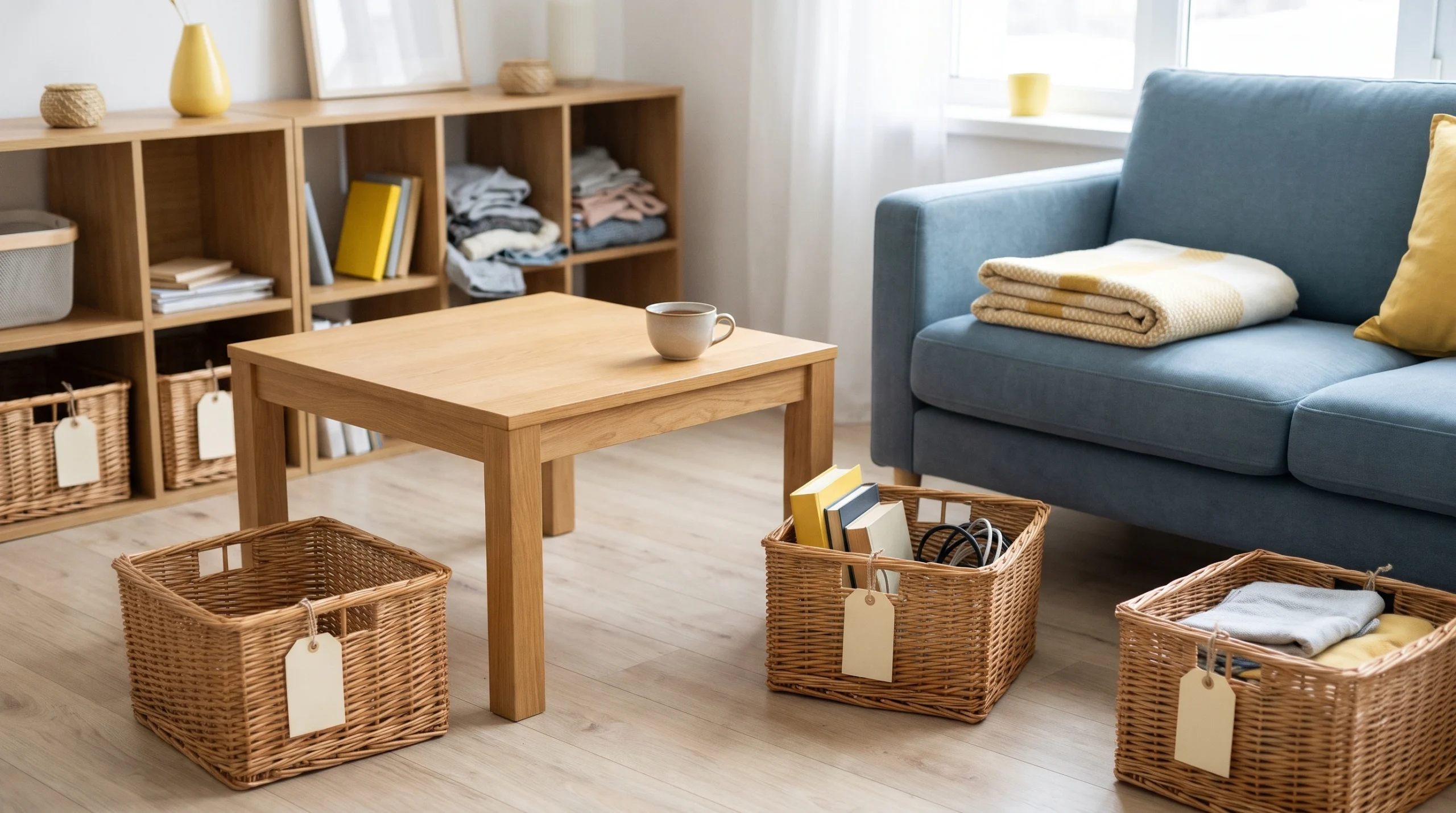
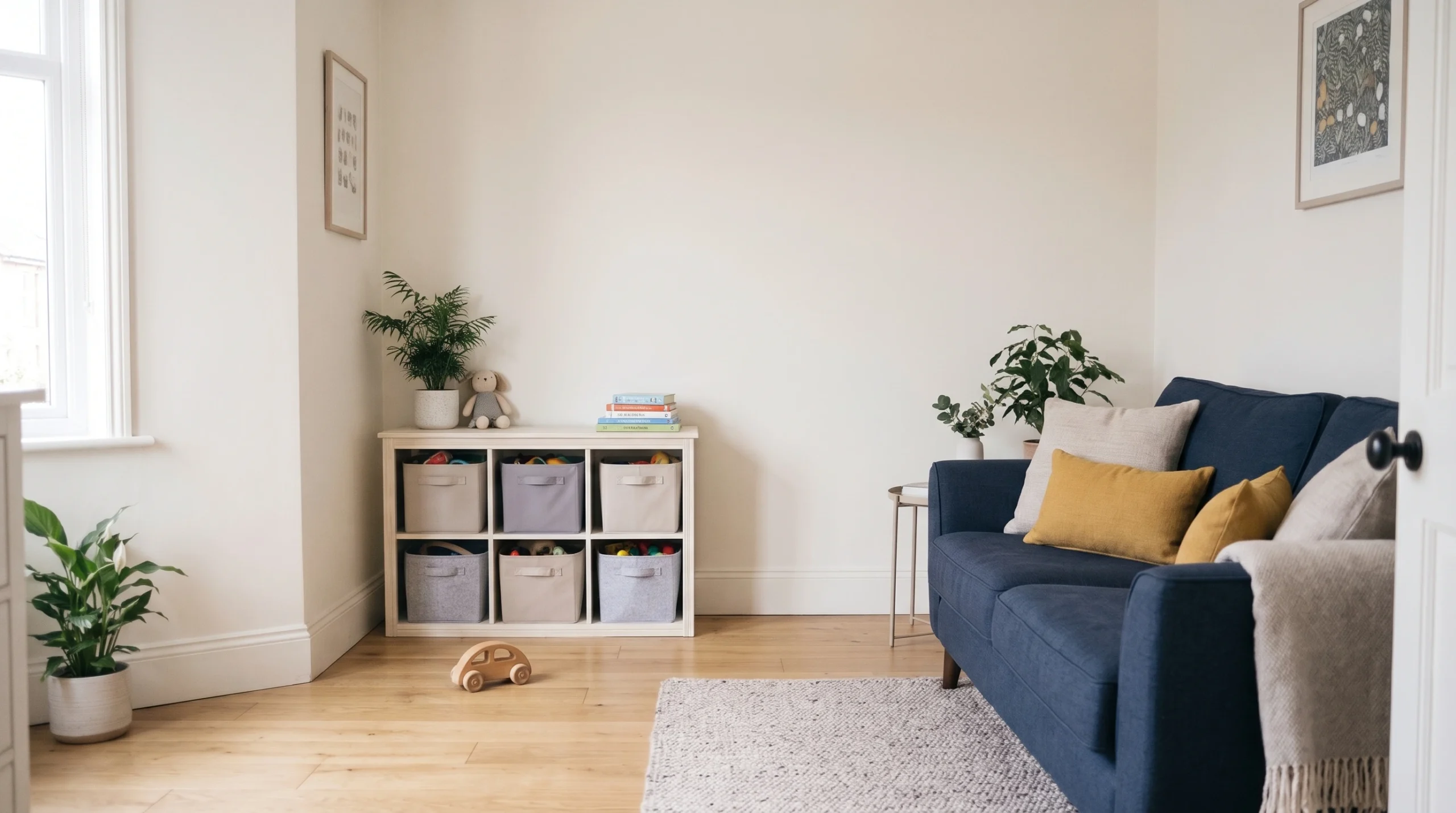
Small living rooms feel crowded when toys drift into every corner. Choose one spot and make it the official toy zone: the space beside the sofa, the bottom shelf of a bookcase, or the corner behind the door. Everything toy-related lives there, and everything else in the room stays toy-free.
That clear boundary makes kids toy storage easier to maintain, because tidying means walking things back to one place instead of hunting around the room. It also gives you something simple to say at cleanup time: “Toys go to the corner.” Start with a small footprint, even a single shelf. You can always expand later, and working one small spot at a time keeps the project from swallowing your weekend.
2. Choose Low, Open Bins Kids Can Reach on Their Own
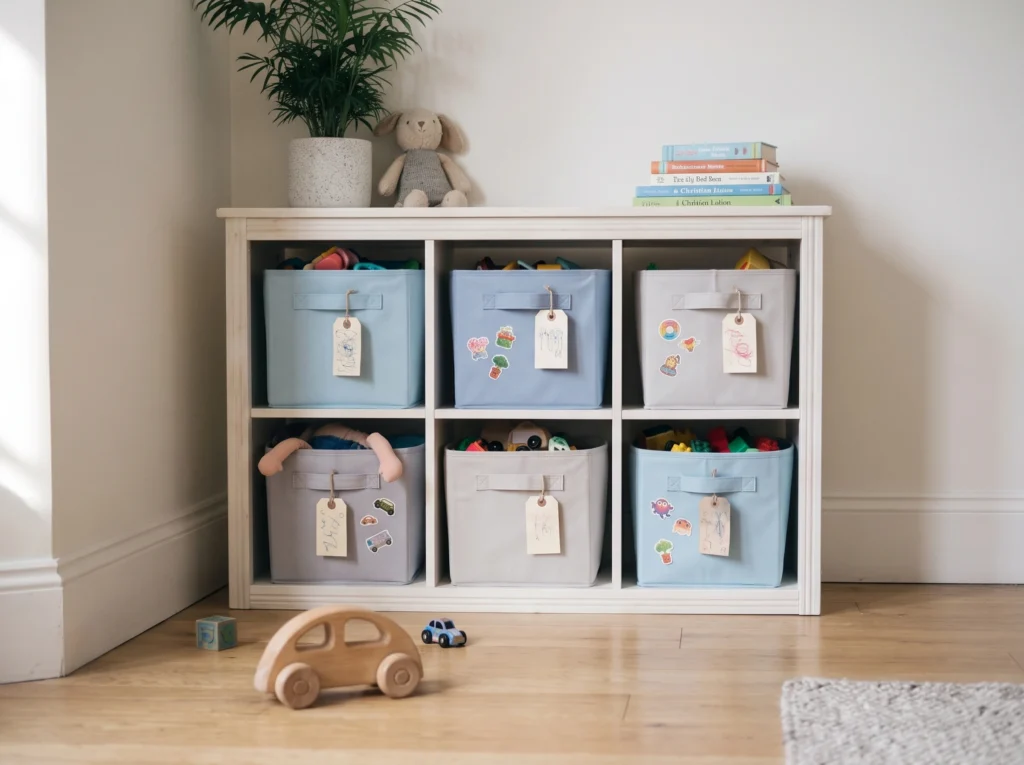
Kids are far more likely to put toys away when they can reach the storage without asking for help. A low shelf or cube unit with open bins at kid height works well in a living room, and the top doubles as a spot for a few books. Keep the categories broad, such as blocks, cars, dolls, and art supplies, so cleanup doesn’t turn into a sorting test. Fabric bins and baskets you already own work just as well as anything new.
Sophie insists on labeling her own baskets with her own spelling. I used to correct them, but I leave them alone now, because a system a kid is proud of is a system a kid will actually use. If your kids are younger, a picture label or a quick sticker on each bin can do the same job.
3. Turn a Storage Ottoman or Bench Into a Hidden Toy Chest
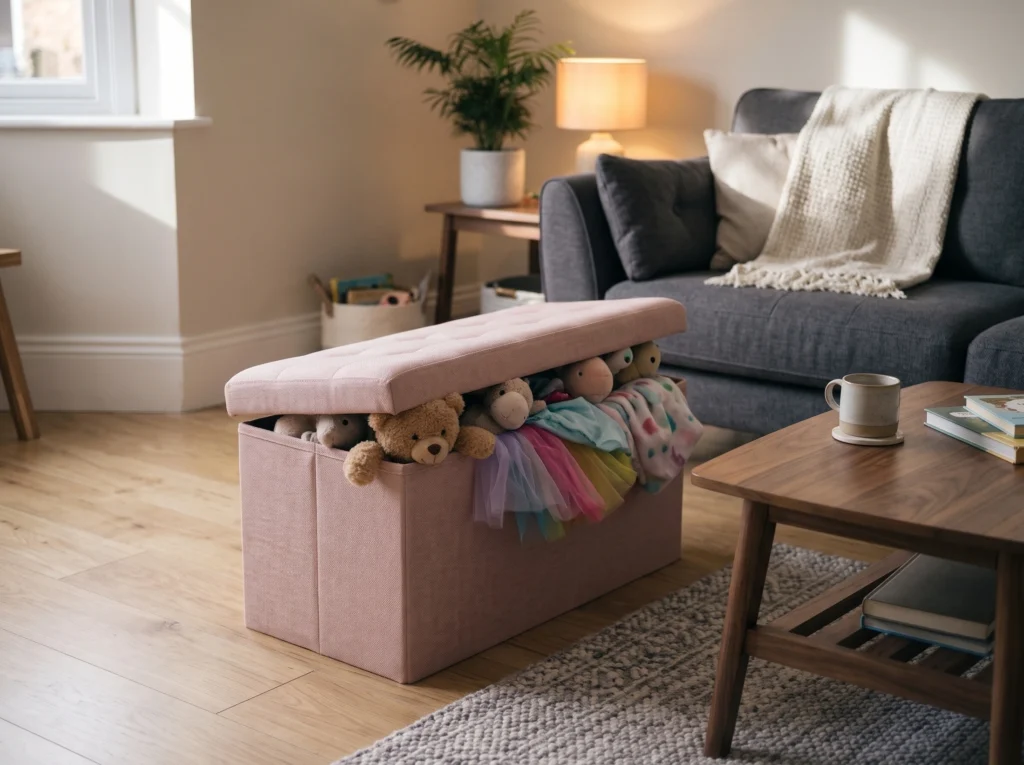
A storage ottoman or lidded bench is one of the most useful pieces you can bring into a small living room, because it works as seating and hides toys at the same time. Stuffed animals, dress-up clothes, and soft blocks all fit well inside. When guests stop by or the evening winds down, the toys disappear and the room looks like a living room again.
This kind of kids toy storage is perfect for those “I need it gone in two minutes” moments. Choose one with a lightweight lid and check that it opens easily, so little hands don’t get stuck. If you’d rather not buy anything, a lidded basket or a trunk you already own can do the same job beside the couch.
4. Use a Rolling Cart to Make Kids Toy Storage Portable
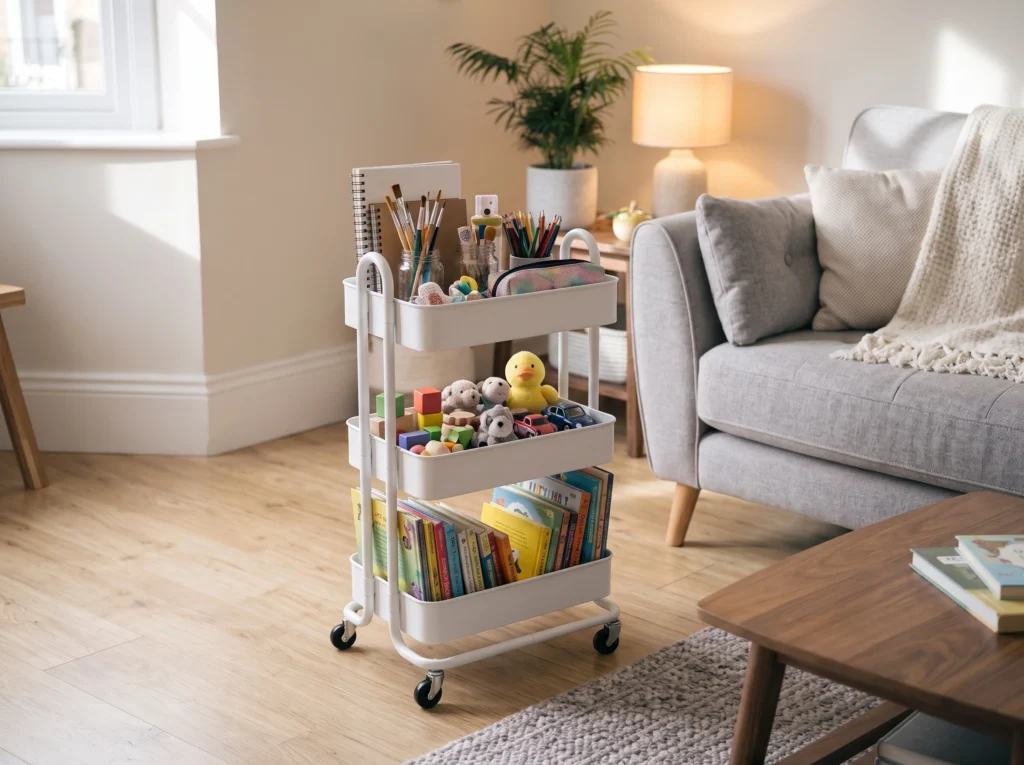
Toys don’t always have to stay in the living room. A small rolling cart can hold a set of toys or craft supplies, then roll into a closet, behind a door, or beside the sofa when playtime is over. It’s especially handy if your kids move from room to room, because the whole activity travels in one piece.
Choose a cart with two or three tiers and give each tier a job: art supplies on top, small toys in the middle, books at the bottom. This portable approach to kids toy storage keeps the main floor open for playing and walking.
If you’d like a simple plan that spreads a home reset across a week, The 7-Day Home Reset Checklist is a free download you can print and tick off in small bites. It’s a gentle way to keep the rest of the house moving while you work on your toy zone.
5. Go Vertical With Wall Shelves, Hooks, and Over-the-Door Pockets
When floor space is tight, look up. Wall shelves above the toy zone can hold board games, special display items, or the toys you want kids to ask for first. Hooks along a wall or the side of a bookcase can hold dress-up capes, tote bags, and backpacks. An over-the-door pocket organizer inside a nearby closet takes care of small things like figures and craft tools.
Anchor any shelf securely to the wall, and keep heavier items low and lighter ones high. Going vertical is a smart way to expand your kids toy storage without taking a single extra square foot, and it keeps the floor clear for playing, vacuuming, and walking to the kitchen at midnight.
6. Rotate Toys So Kids Toy Storage Stays Small
One of the easiest ways to shrink the pile is to keep only some toys out at a time. Choose a handful of bins for the living room and store the rest in a closet, under a bed, or on a high shelf. Every couple of weeks, swap a bin or two.
Rotating can make older toys feel new again, so kids may play with what’s already in the house instead of asking for more. It also stops the living room from carrying every toy the family owns. Label the rotation bin so you remember what’s inside, and don’t worry about keeping a strict schedule. If the swap only happens when you notice the room feeling crowded, that still counts.
7. Build a Two-Minute Toy Reset Into the Evening
Even the best setup needs a quick reset. Pick a time, like right after dinner or before bath, and set a two-minute timer. Kids put toys back in their bins while you straighten the couch cushions and clear the coffee table. It doesn’t have to look staged, it just has to work for your family. Put on some music if it helps, and keep the bar low: toys in the right bin, not arranged in a neat line. The more often the reset happens, the less time each one takes.
When you’re ready for room-by-room steps beyond the living room, The Home Organization Reset brings decluttering checklists, simple routines, and step-by-step guidance together in one PDF guide. As always, take what helps and leave the rest.
Questions About Kids Toy Storage in Small Rooms
How much toy storage does a small living room need?
Kids toy storage in a living room only needs to hold what gets played with every day. For many families, that’s two to four bins, or one shelf plus an ottoman. Keep the rest in a closet and rotate it in. If everything fits in your toy zone without overflowing, you’ve got the right amount.
What if my kids dump every bin at once?
It happens in every house. Try a simple rule: one bin out at a time, and it goes back before the next one comes out. Fewer, broader bins make that rule easier to follow. If the dumping keeps happening, the bins may be holding too many toys, so move a few into your rotation bin.
Do I need to buy special furniture?
No. A sturdy basket, a laundry basket, a box with a lid, or a bookcase you already own can work as toy storage. Start with what you have and add only what’s missing once you’ve lived with the setup for a week or two.
Your Next Small Step for a Calmer Living Room
You don’t need a bigger room to make kids toy storage work. Pick one corner today, sort a single bin, and put it where little hands can reach. That’s enough for a first win. Over the next few days, add a bin, a cart, or a two-minute evening reset, whichever feels easiest.
Every home with kids is a real house with real people in it, so some days the toys will still end up on the floor, and that’s okay. Come back to your zone, reset, and keep going.