A decluttering challenge sounds great until you look around a small home and realize there’s nowhere to put the “keep” pile. The counter is full, the closet door barely shuts, and a free weekend to sort it all feels like a joke. What if you only needed about ten minutes a day and one small spot to focus on? This 30-day plan breaks the work into tiny daily wins, so your home gets lighter without taking over your life.
Step 1: Set Up Your Decluttering Challenge and Start With Easy Wins (Days 1–7)
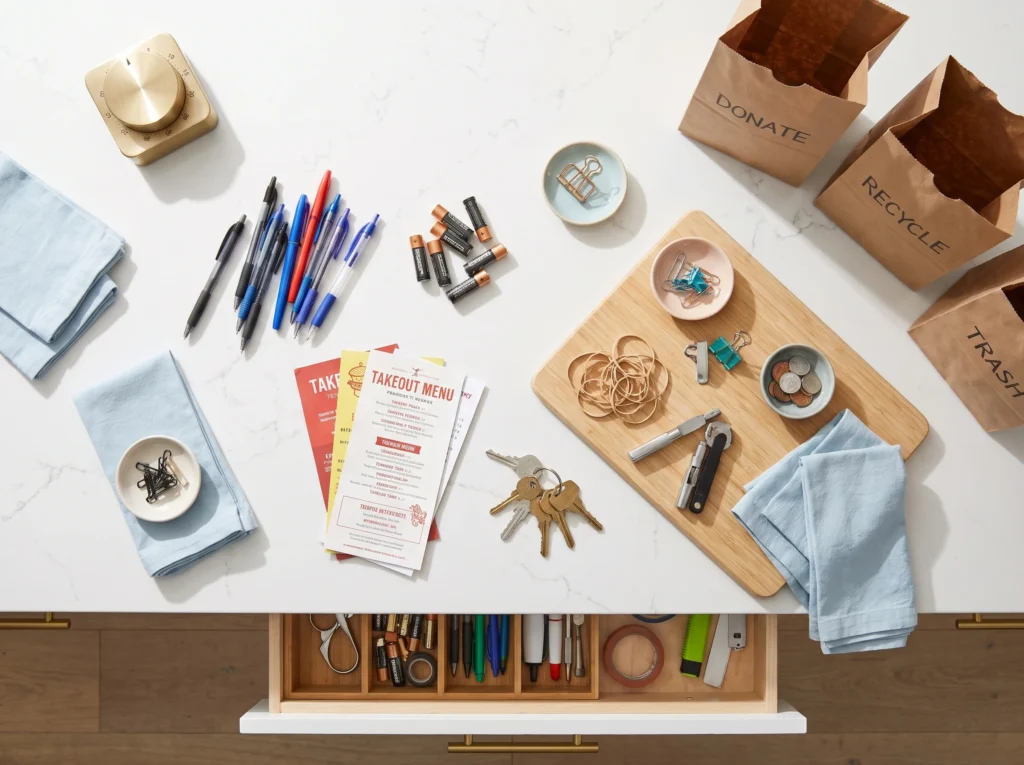
The first week is about momentum, not big decisions. Before Day 1, set a few simple ground rules so the month stays light:
- Set a timer for ten minutes. When it rings, you’re done. Stopping on time is what makes this doable on a busy day.
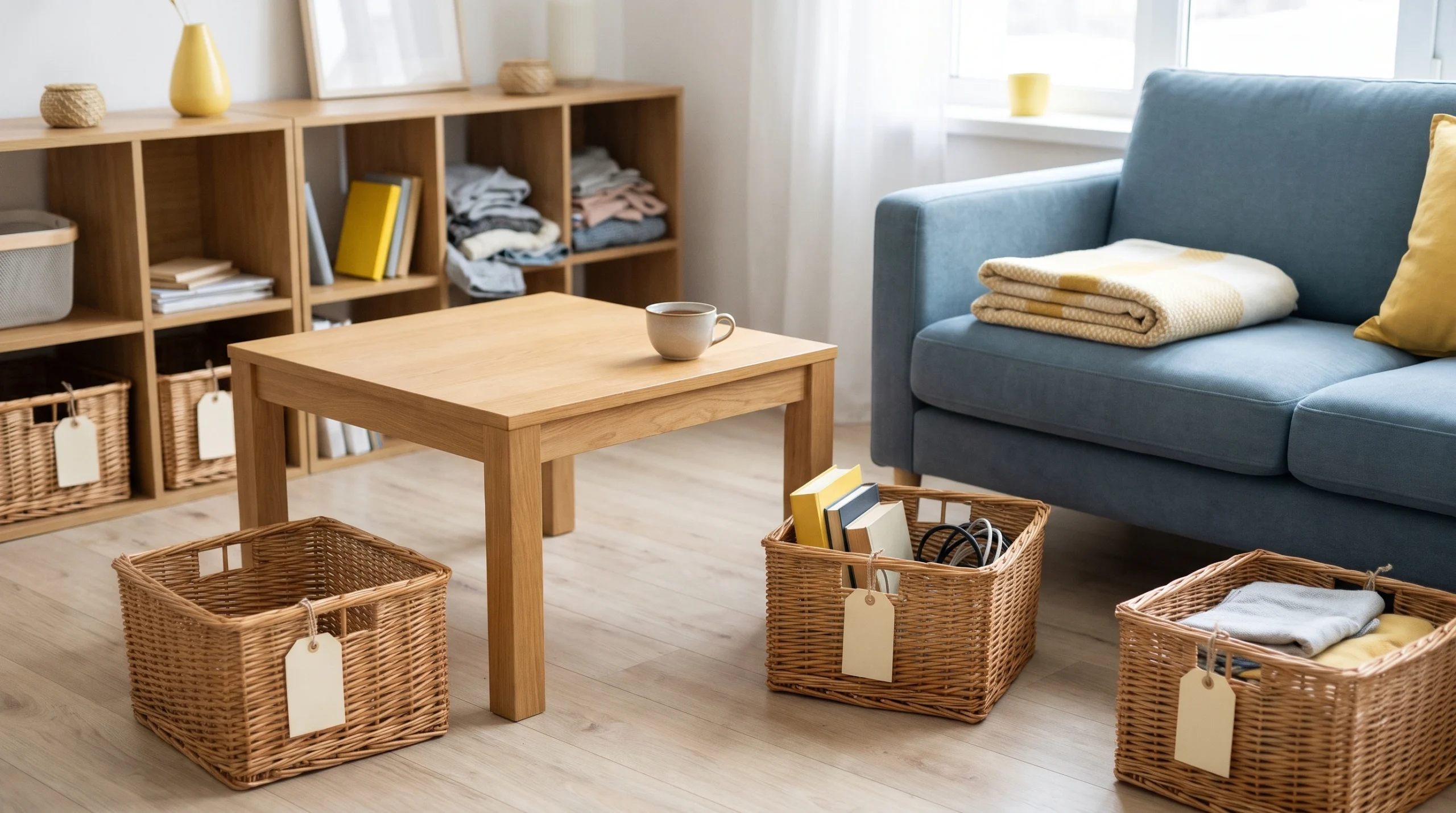
- Grab three containers. Label them donate, trash or recycle, and “belongs somewhere else.” Paper grocery bags or a laundry basket work fine.
- Don’t buy anything yet. No bins, no baskets, no organizers. You’ll know what you actually need once you’ve sorted.
- Give every keeper a home. If an item doesn’t have a spot, it ends up on the nearest flat surface. Decide on its spot before it goes back.
If you’ve struggled to begin in the past, this post on how to start decluttering when you don’t know where to begin pairs well with this week.
Here’s what the first seven days look like:
- Day 1: Clear the kitchen counter. Anything that doesn’t belong there goes in the “belongs somewhere else” container.
- Day 2: Empty and sort the junk drawer. Toss dead pens, loose batteries you can’t test, and takeout menus.
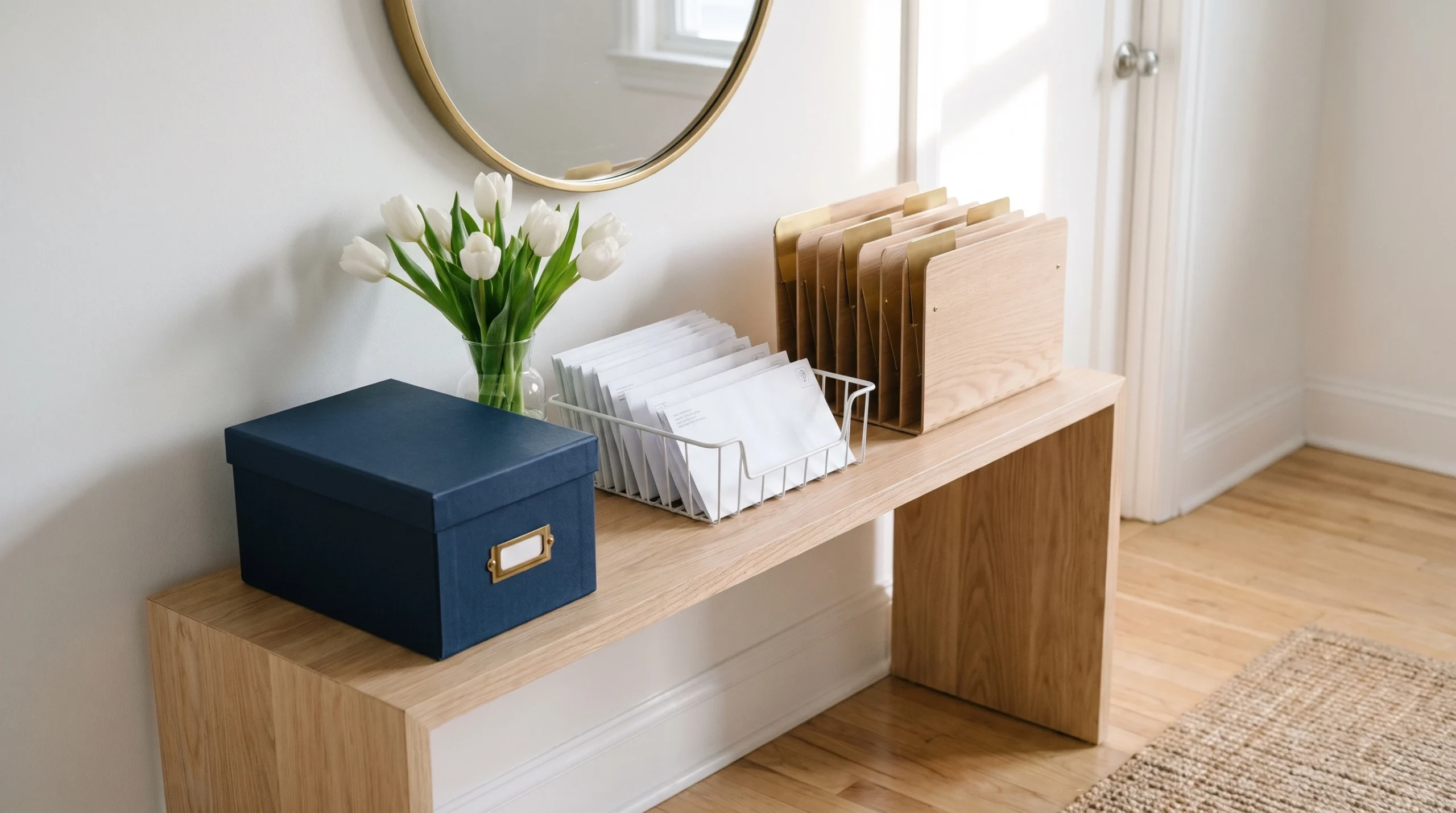
- Day 3: Sort the mail and paper pile. Recycle what you can and give the rest one basket.
- Day 4: Clear the entryway floor. Keep only the shoes and bags the family uses this week.
- Day 5: Clear the bathroom counter. Put daily items in a small tray and move the rest.
- Day 6: Clear the coffee table and the surface by your favorite chair.
- Day 7: Rest day. Walk the house with your “belongs somewhere else” container and return strays to their homes.
By the end of week one, the places you see most already look calmer. That visible change is what keeps a decluttering challenge going.
Step 2: Move Through the Kitchen and Bathroom Cabinets (Days 8–14)
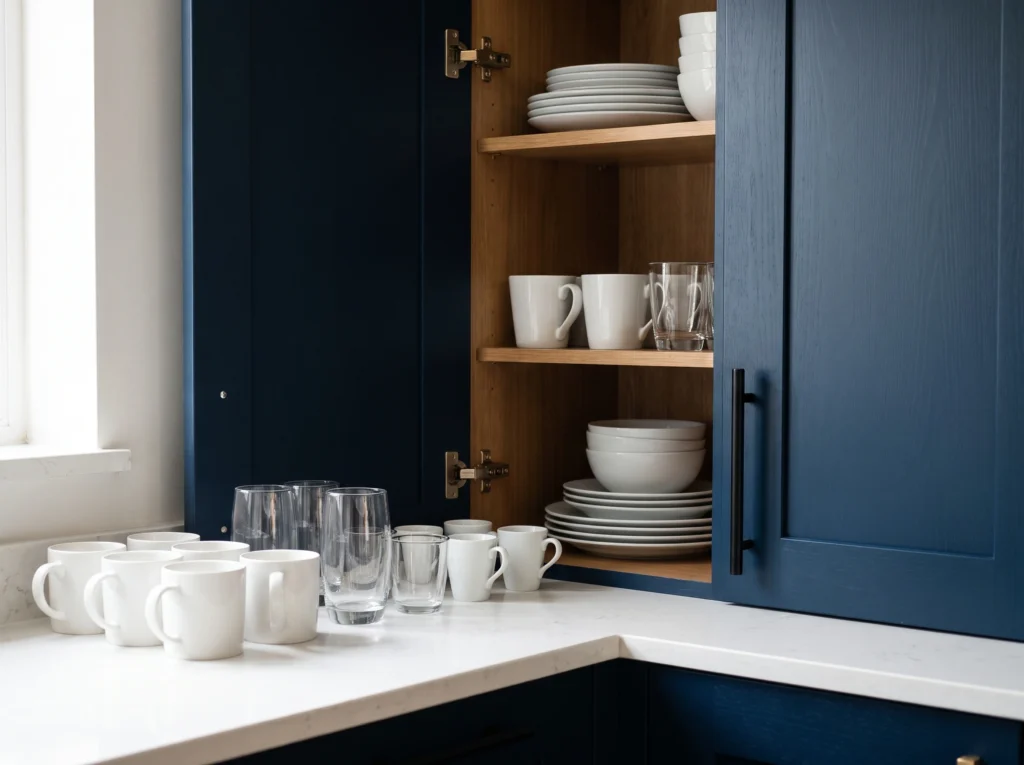
Week two goes behind closed doors. Cabinets are where small homes hide the most clutter, because everything gets squeezed in “just for now.” Keep the same ten-minute timer and the same three containers.
- Day 8: Mugs, cups, and glasses. Keep the ones you reach for and donate the extras that only come out for guests who never come.
- Day 9: Food storage containers. Match every lid to a container, and recycle any orphans on either side.
- Day 10: One pantry shelf. Check dates, toss what’s expired, and group like items together.
- Day 11: The cabinet under the kitchen sink. Wipe it out and keep only what you actually use for cleaning.
- Day 12: Bathroom drawers. Pull out old, dried-up products you’ve stopped using.
- Day 13: Towels and washcloths. Keep a realistic number for your household and donate the thin, scratchy ones.
- Day 14: Rest day, or a quick catch-up on any day you missed.
A helpful trick in small spaces: if a cabinet looks packed, take everything out first. Seeing it all on the counter makes it much easier to tell what’s worth keeping, and it only takes a minute to put the keepers back.
If you’d like a little structure while you work through these days, the Daily and Weekly Planner Set can help you pencil in your ten minutes so the challenge doesn’t get lost in a busy week.
Step 3: Clear Bedrooms and Closets Without Buying Storage (Days 15–21)
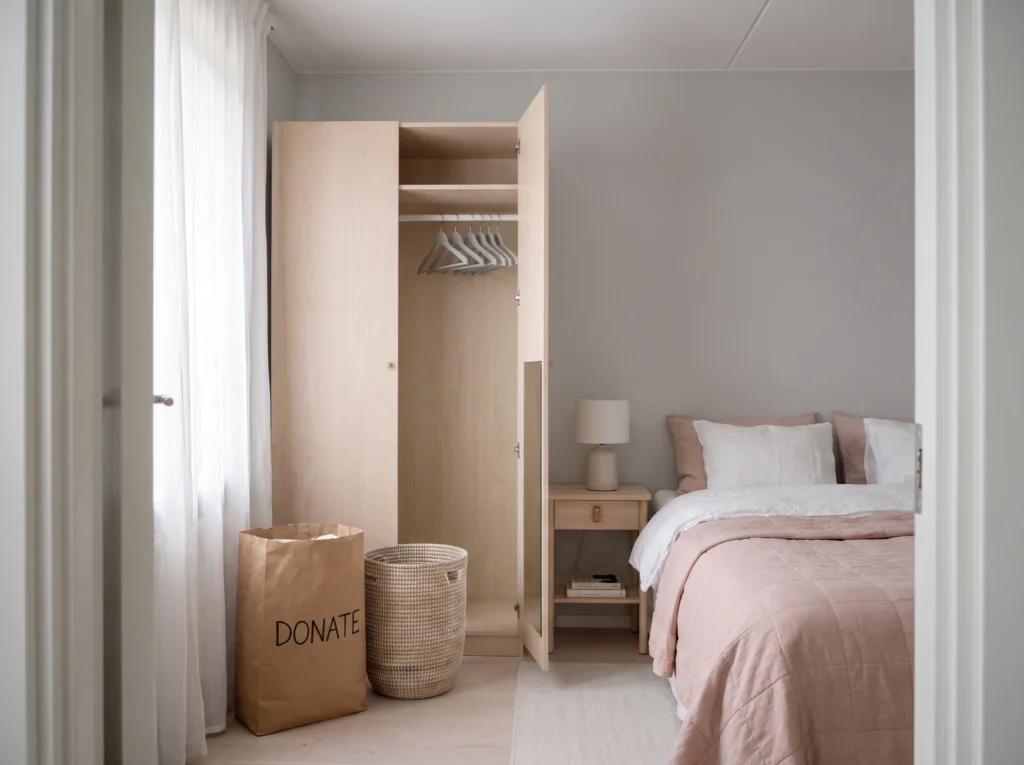
By week three, you’ve built a habit, and it’s time for the spaces where things tend to pile up quietly. Bedrooms collect clothes, paper, and “I’ll deal with it later” items faster than almost any other room. This week is also where I’d remind you of a lesson I learned the hard way.
I bought matching containers, and twelve matching baskets, before I’d decluttered anything. They looked lovely for about a week, then just held more of the same clutter, and I returned most of them. Declutter first, buy storage last.
- Day 15: Your nightstand. Keep what you use nightly and move or toss the rest.
- Day 16: The dresser top. Give jewelry, lotions, and loose change a single small tray.
- Day 17: One dresser drawer. Choose the drawer that annoys you most and sort it by what you actually wear.
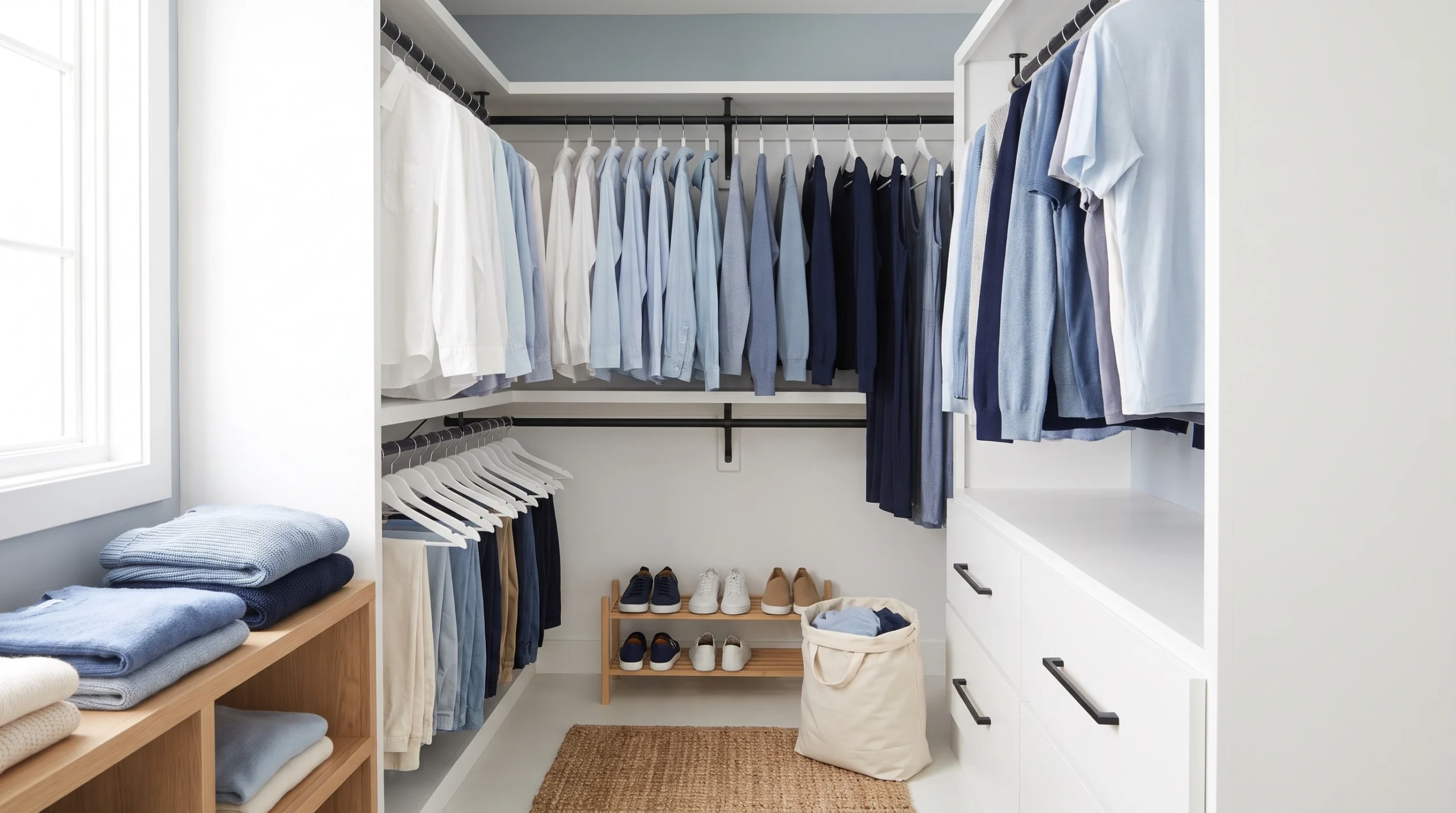
- Day 18: Hanging clothes, one section only. Ask, “Would I wear this in the next month?” If not, it goes in the donate bag.
- Day 19: Shoes. Keep the pairs you walk in and let go of the ones that always hurt.
- Day 20: The floor around your bed, plus anything under it.
- Day 21: Rest day. Put the donate bags by the door so they actually leave.
Don’t worry about turning your closet into something magazine-worthy. A closet that just works for your family is the goal.
Step 4: Finish the Decluttering Challenge in the Living Room, Hall Closet, and Kids’ Spaces (Days 22–30)
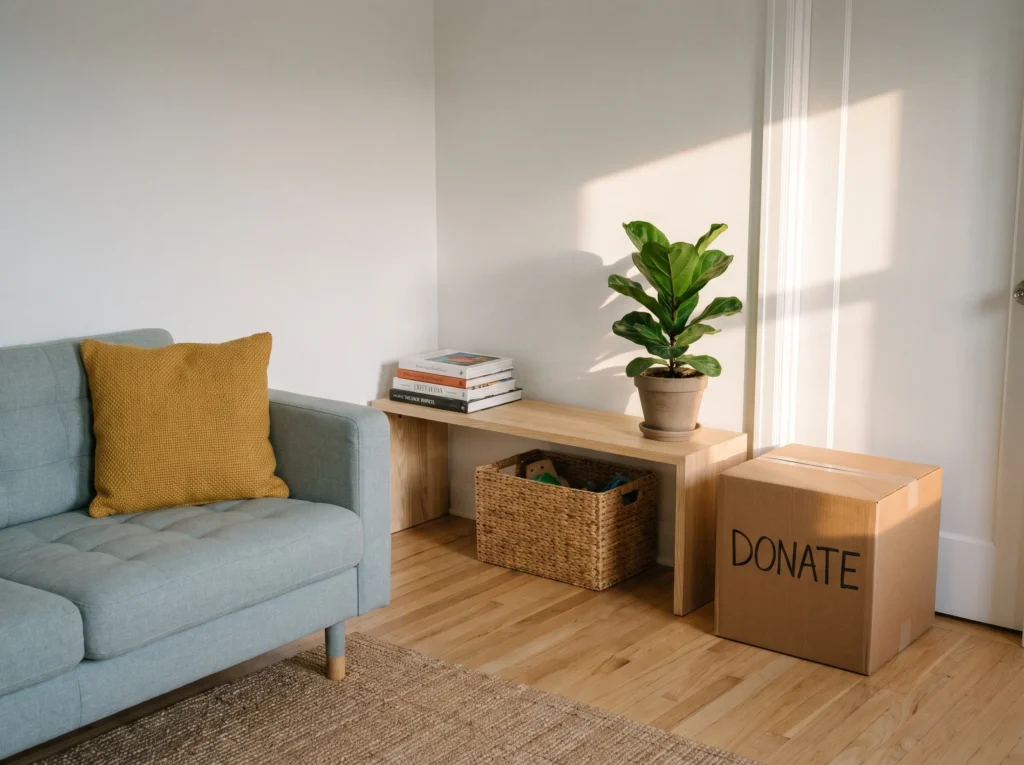
The last stretch covers shared spaces, which are often the trickiest because other people’s things live there too. Go gently and handle your own items first.
- Day 22: Living room surfaces and shelves. Keep a few things you love and give the rest a break from display.
- Day 23: The coat or hall closet. Pull out anything that isn’t a current-season coat, bag, or shoe.
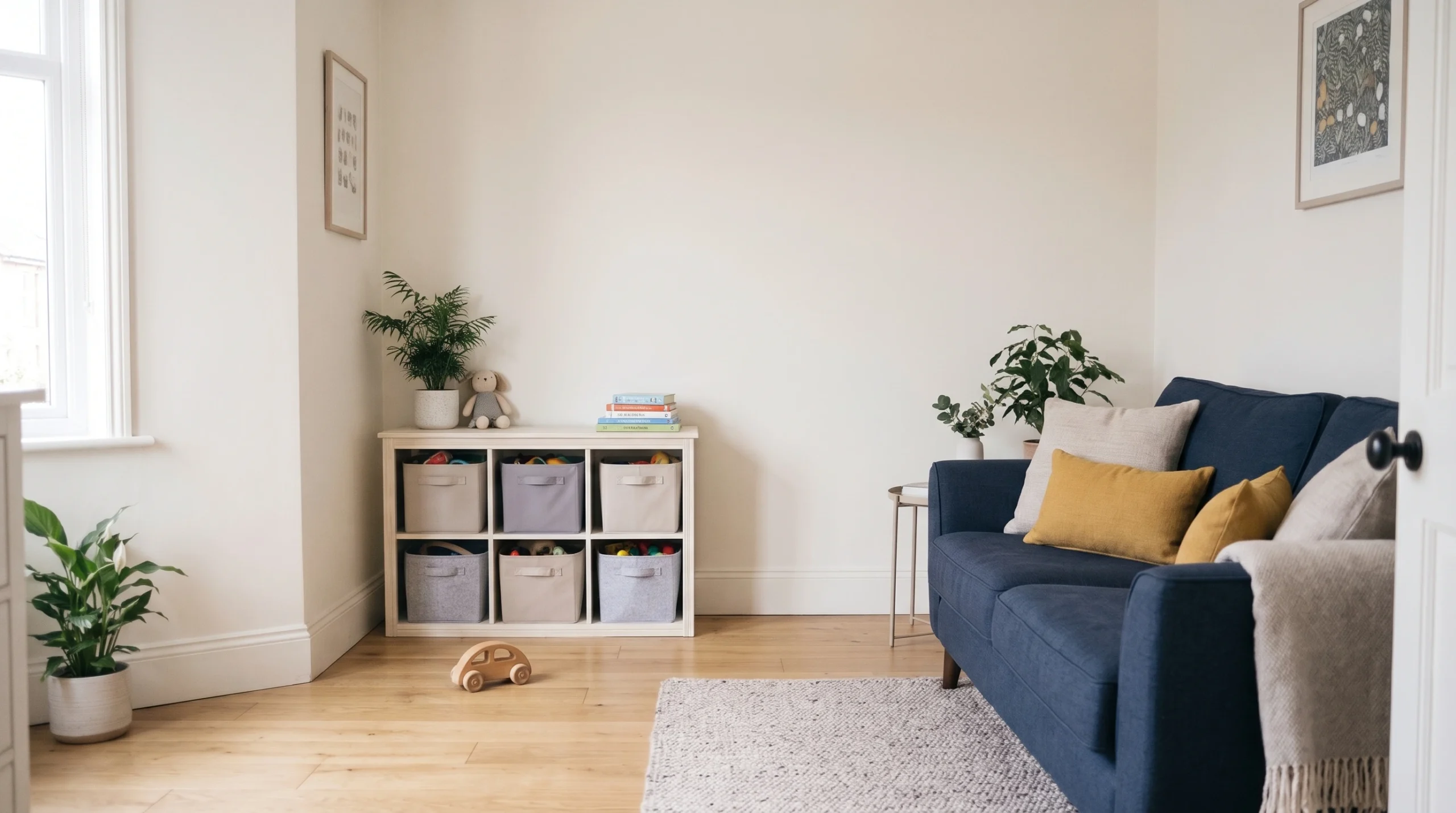
- Day 24: Toys, one bin at a time. Broken pieces and single-use junk go first.
- Day 25: Books and magazines. Keep the ones you’ll read again and pass along the rest.
- Day 26: The laundry area. Clear off the shelf, toss empty bottles, and make room for a basket that has a spot.
- Day 27: Sentimental items, in one small box. You don’t need to keep everything, but you don’t need to decide everything today either.
- Day 28: Chargers, cords, and the electronics drawer. Test and toss.
- Day 29: Walk through every room and put away anything that drifted back.
- Day 30: Celebrate with a quick reset and one donation drop-off.
Now that you’ve sorted the house, you can see what storage you truly need. If you’d like a clear path for what comes next, The Home Organization Reset walks through room-by-room guidance and simple routines so the calm you’ve created is easier to keep.
If you miss a few days, just pick up where you left off. There’s no pressure here, and a messy week doesn’t cancel what you’ve already cleared.
FAQ
What if I miss a day during the decluttering challenge?
A missed day during a decluttering challenge doesn’t ruin anything. Simply pick up with the next day’s task, or use a rest day to catch up. The goal is steady progress, so a gap of a day or two is just part of real life.
How much time do I need each day?
Plan on about ten minutes, which is enough to clear one drawer, shelf, or surface. On days when you have more energy, you can keep going. On tired days, stopping when the timer rings still counts.
What if my family doesn’t want to get rid of things?
Start with your own belongings and shared spaces, and let the results speak for themselves. Give family members their own box or basket for the things they want to keep, and let them decide what goes in it. Pressure usually backfires, but a calmer house tends to make people curious.
Your Next Small Step
You don’t need a free weekend, a big budget, or a perfectly organized starting point. Choose tomorrow’s spot, set a ten-minute timer, and begin your decluttering challenge with the kitchen counter. Take what helps from this plan and leave the rest, because the best system is the one your household will actually use. One small spot at a time, your home can feel calmer than it does today.