
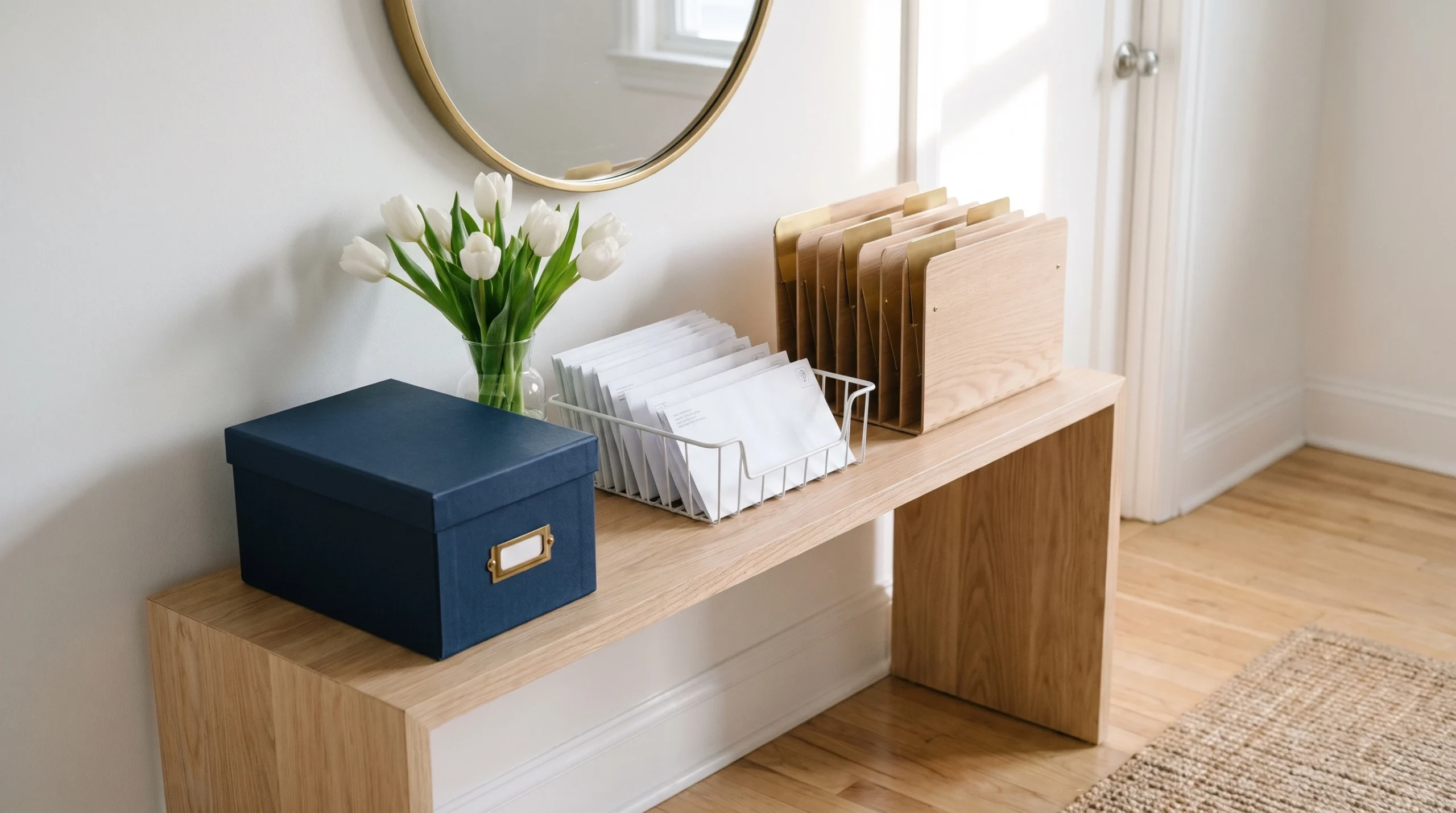
Paper clutter solutions are what you go looking for when your kitchen counter has become a landing strip for mail, school forms, and takeout menus. You clear it on Sunday, and by Wednesday it’s buried again. The problem usually isn’t laziness. Most papers simply have no home, so they wait on the nearest flat surface. A simple filing system fixes that, and it takes far less time and money than you might expect.
Why Most Paper Clutter Solutions Fall Apart in a Week
Most advice about paper assumes you have a home office, a filing cabinet, and a free Saturday. Real life looks different. Papers arrive a few at a time, and they land wherever your hands happen to be when you walk in the door.
I grew up in a house that was always “almost put away,” with piles of mail on the counter. You may know that scene well. A pile like that rarely comes from one big mistake. It grows out of dozens of tiny decisions you didn’t have time to make.
Three habits usually keep the pile alive:
- Papers get set down “just for now,” with no destination in mind.
- Everything is treated as equally important, so nothing gets sorted.
- The filing system is so fancy that you skip it when you’re tired.
The fix is a system small enough to use on your worst day. That’s the idea behind every one of the paper clutter solutions below: fewer categories, fewer steps, and a clear spot for everything.
5 Paper Clutter Solutions You Can Set Up This Week
You don’t need a free weekend for any of this. Each step fits into about fifteen minutes, and you can stop after any one of them and still come out ahead.
1. Gather Every Paper Into One Spot
Grab a laundry basket or a tote bag and walk through the house. Collect papers from the counter, the car, your purse, the nightstand, and that one drawer everyone avoids. Dump it all on the table. It will look worse before it looks better, and that’s completely normal. Seeing the whole pile at once is useful, because you finally know what you’re dealing with.
If you’re not sure where to begin with the rest of the house, Start Decluttering When You Don’t Know Where to Begin is a good next read once the paper is under control.
2. Sort Everything Into Four Simple Piles
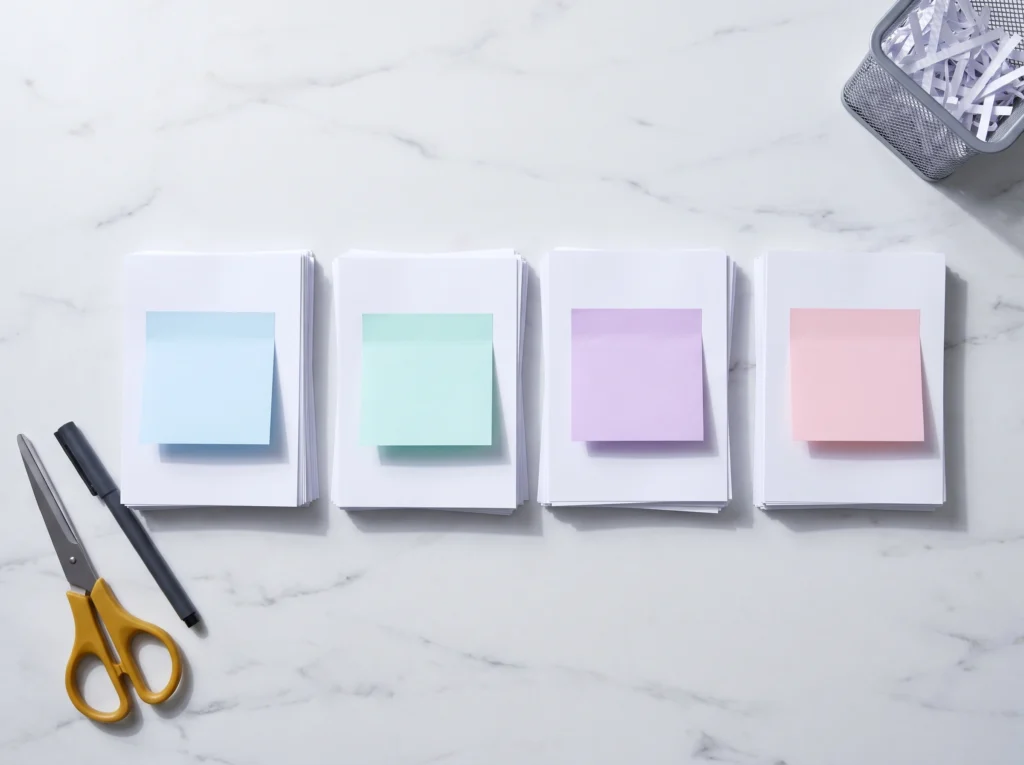
Make four piles: Act, Keep, Shred, and Recycle. Go through the stack one sheet at a time, and try not to read anything twice. A form to sign or a bill to pay goes in Act. Anything with account numbers or personal details goes in Shred. Junk mail, expired coupons, and old flyers go straight to Recycle. Keep gets only what you will truly need later, such as insurance documents, medical records, and tax papers.
Sorting is the step that makes the biggest visible difference of all the paper clutter solutions here, so give it your best fifteen minutes. If you’d like a gentle plan for the rest of your home too, my free The 7-Day Home Reset Checklist breaks things into small daily steps, so you can try it before you decide anything else.
3. Build a Small Filing System With Just a Few Folders
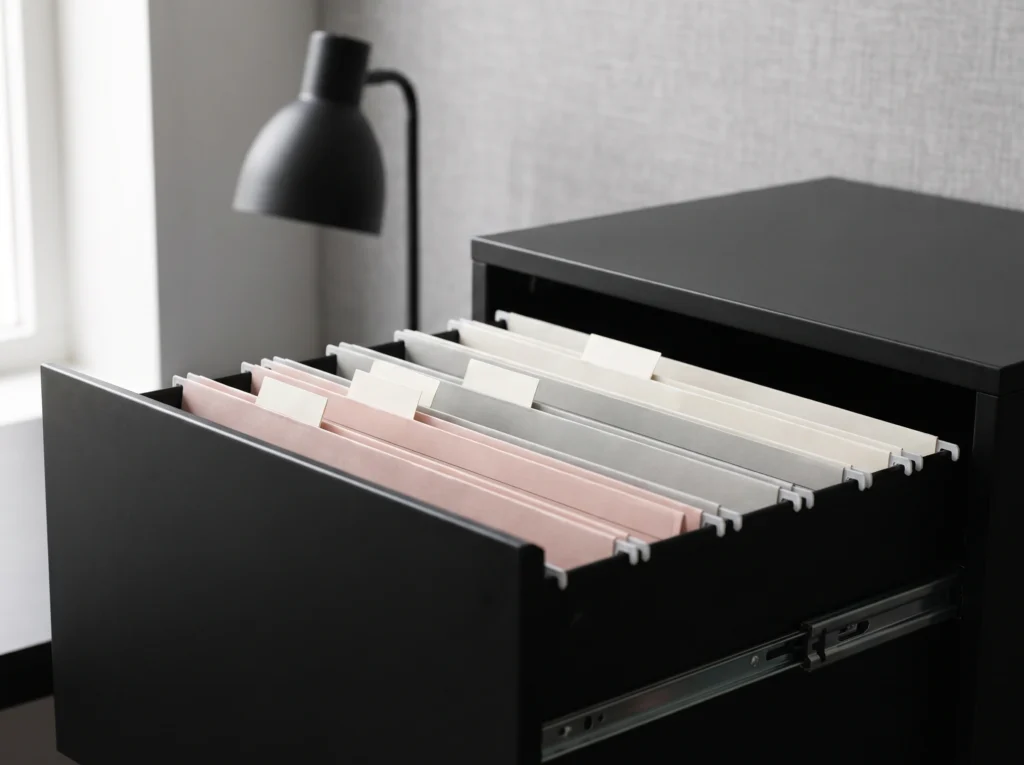
Now your Keep pile needs a home. Skip the big filing cabinet. An accordion file, a small file box, or one drawer with hanging folders works just as well. Aim for broad folders instead of dozens of narrow ones:
- Home: lease or mortgage, insurance, repairs, warranties
- Money: tax records, bank statements, bills
- Health: medical and dental paperwork, insurance cards
- Family: school papers, activities, kids’ records
- Pending: anything waiting on a reply or a date
Label each folder in plain words you’ll remember. And remember the rule I live by: declutter first, buy storage last. Use what you already own, and only buy a file box once you see how much you’re actually keeping.
How long to hold on to each type of record depends on the document, so check with your tax preparer or official guidance for anything important, like taxes or legal papers. When in doubt, put it in Pending and ask.
4. Give Incoming Mail a Landing Spot by the Door
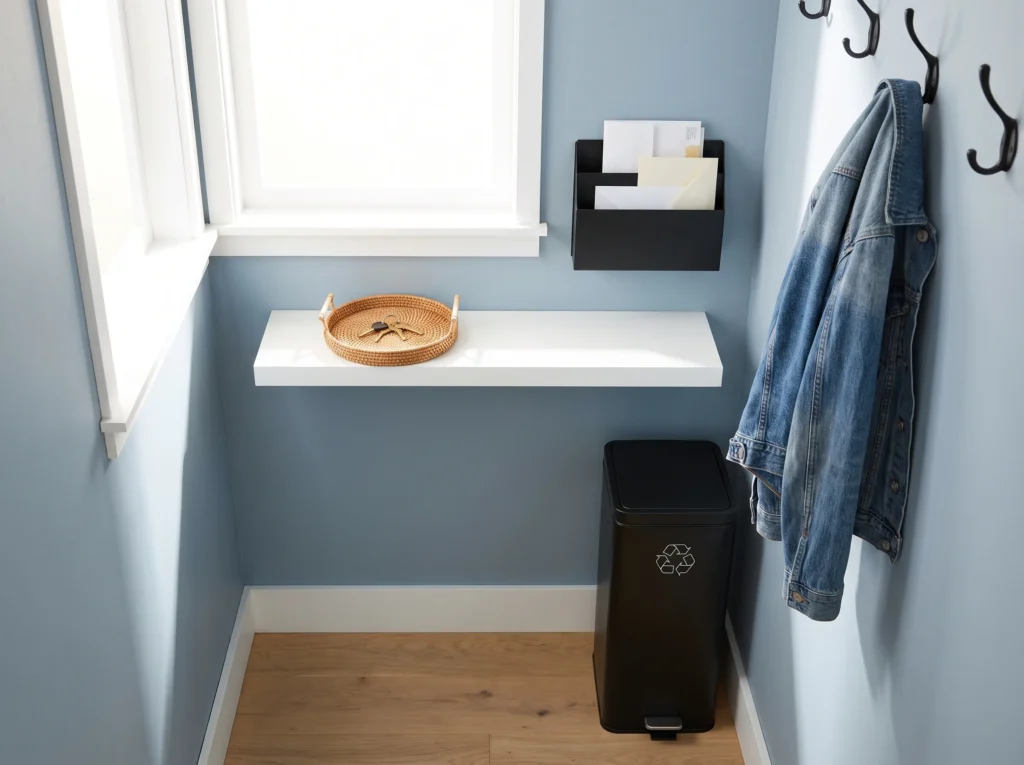
Most paper clutter starts at the entry. Set up a small tray, basket, or wall file where mail lands the moment it comes in. Open it right there, ideally next to the recycling bin. Junk goes out immediately. Anything that needs action goes into the Act tray, and everything else goes straight to its folder.
This one habit stops new piles from forming, which makes it one of the most practical paper clutter solutions for a busy household. It also takes about thirty seconds a day.
5. Add a Five-Minute Weekly Paper Reset

Pick a regular time, like Sunday evening or while dinner is cooking. Set a timer for five minutes. Work through the Act tray: pay the bill, sign the form, make the call. Shred what’s finished. File what’s left. That’s all. On a crazy week, do a two-minute version. A short reset still beats skipping it altogether.
Keeping Your Paper Clutter Solutions Going When Life Gets Busy
A system only works if you actually use it. Here are a few ways to make it stick in a real house with real people in it.
Keep it boring on purpose. A plain folder with a clear label beats a beautiful binder you never open. It doesn’t have to look staged. It just has to work for your family.
Make it easy for everyone. If your husband or kids bring papers home, show them the landing spot and the Act tray, and that’s it. The fewer rules, the more likely they’ll follow them. If the system needs a long explanation, simplify it.
Handle papers once. When something comes in, decide right away: act, file, shred, or recycle. Don’t set it down for later. “Later” is how piles are born.
Go easy on yourself. You will miss a week. Everyone does. Pick the tray back up the next day and keep going. A slightly messy folder is still far better than a mountain on the counter.
If you’d like the same simple approach for the rest of your house, The Home Organization Reset is my step-by-step PDF guide, with decluttering checklists, room-by-room guidance, and easy routines you can fit around a busy life. It’s there if you want it, and the tips in this post work on their own.
Common Questions About Paper Clutter and Home Filing
What are the easiest paper clutter solutions for a small home?
The easiest paper clutter solutions are a mail landing spot by the door, four sorting piles, and one small file box with a handful of folders. You don’t need a desk or a cabinet. A drawer, a shelf, or a basket in a closet is plenty for most households.
How many folders do I really need?
Start with five or fewer broad folders, like Home, Money, Health, Family, and Pending. If a folder gets too full, you can split it later. Starting small keeps the system simple enough that you’ll actually use it.
What should I do with papers I’m not sure about?
Put them in the Pending folder and set a reminder to look again in a month or so. Most of the time the answer becomes obvious. For tax, legal, or financial papers, ask a professional or check official guidance before you toss anything.
Your Next Small Step With Paper
You don’t have to fix every drawer and pile this weekend. Choose one step from this post and do it today. Maybe that’s grabbing a basket and gathering the stray papers into one spot, or setting up a tray by the door. These paper clutter solutions work because they’re small, and small things get done.
Take what helps and leave the rest. A calmer counter is just a few folders and five minutes away.








1 thought on “Paper Clutter Solutions: A Simple Home Filing System”