A post-dinner kitchen routine can be the difference between a calm morning and facing last night’s pans before you’ve had your coffee. You know the scene: plates stacked by the sink, crumbs across the counter, and a tired body that only wants the couch. The good news is that ten minutes is enough to turn that around. You don’t need extra energy or a special plan, just a short order of steps that gets the kitchen ready for tomorrow.
Why a Post-Dinner Kitchen Routine Beats a Weekend Scrub-Down
Most kitchen mess isn’t hard to clean. It’s just easy to put off. When dinner ends, everyone scatters, and the dishes become a problem for “later me.” By morning, later me is rushed and looking for a clean mug.
A short, repeatable routine works because it removes the decisions. You aren’t choosing what to tackle first or wondering whether tonight is a deep-clean night. You follow the same order every evening, and the order does the thinking for you. A post-dinner kitchen routine also keeps the work small enough that it never grows into a Saturday project.
Think of it as a quick reset, not a cleaning session. The goal is a counter you can see, a sink that’s ready for the morning, and a floor you won’t regret stepping on. Nothing here needs special products or a free weekend.
Your Ten-Minute Post-Dinner Kitchen Routine, Step by Step
Set a timer for ten minutes and work through the order below. The times are rough guides, so adjust them to fit your kitchen. This post-dinner kitchen routine works best when you start right after the table is cleared, before you sit down for the night.
1. Clear the Table and Counters (1 minute)

Carry everything that doesn’t belong in the kitchen back to where it lives, and bring the dirty dishes over to the sink area. Don’t wipe anything yet. Moving the items first makes every later step faster, because you can finally see what’s actually left to deal with.
2. Put Leftovers Away (2 minutes)
Scoop leftovers into containers you already own, snap on the lids, and put them in the fridge. If something won’t get eaten, let it go tonight rather than letting it grow into a fridge-cleaning job later in the week. Putting food away early also clears a lot of counter space at once.
3. Scrape and Stack the Dishes (1 minute)
Scrape plates into the trash, then stack them by type: plates together, bowls together, cups together, pans on their own. Stacking looks like a tiny detail, but it keeps the sink usable and makes washing or loading go much faster. A neat stack also feels less discouraging than a heap.
4. Load the Dishwasher or Wash by Hand (3 minutes)

This is the biggest step, so give it the most time. If you have a dishwasher, load it in the order you stacked, and start it if it’s full. If you wash by hand, do the glasses and plates first and let the pans soak while you finish the rest. Whatever doesn’t fit in three minutes can wait in the sink to soak. The point is to make real progress, not to finish every last pot.
5. Wipe the Counters and Stovetop (1 minute)
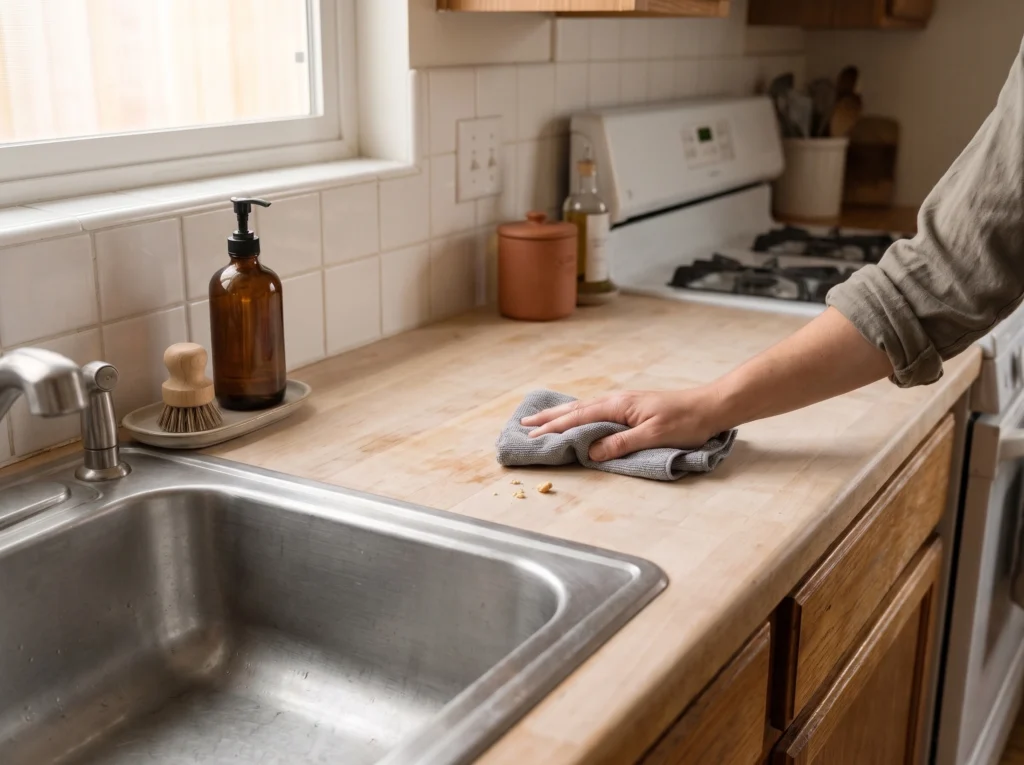
Grab a damp cloth and wipe from the back of the counter toward the front, so crumbs end up in your hand or the sink. Give the stovetop a quick pass too, since splatters are far easier to remove while they’re fresh. A wiped surface changes how the whole room feels.
6. Do a Quick Sink and Floor Check (1 minute)
Rinse out the sink and clear the drain of any food bits. Then look at the floor. If there are crumbs or spills near the table or stove, give those spots a quick sweep or wipe. You’re only dealing with the places you’ll actually step tomorrow, not mopping the whole room.
7. Set Up Tomorrow’s Kitchen (1 minute)

Take the final minute to make the morning easier. Put out the coffee mugs, empty the drying rack, and move lunch containers or the kids’ water bottles to where you’ll grab them. Take a quick look at tomorrow’s plan, and if something needs to thaw, move it to the fridge. This last step feels small, but it’s the one that makes mornings calmer.
If you like seeing a plan on paper, the Printable Cleaning Planner can be a handy place to keep your kitchen steps where you’ll see them every evening.
What to Do on the Nights You Have Five Minutes, Not Ten
Some evenings just fall apart. There’s homework, a late meeting, a sick kid, or you’re simply done. On those nights, a shorter version still counts, and doing something is better than skipping the routine altogether.
The five-minute version has three parts:
- Put the leftovers away.
- Stack the dishes and load whatever fits.
- Wipe the counters and sink.
That’s it. Anything still dirty can soak overnight, and tomorrow’s you will find a kitchen that’s easy to walk into rather than a disaster. There’s no pressure here to do every step every night. Keeping the habit alive matters more than doing it by the book.
If you’d like to carry the same idea beyond the kitchen, my evening reset routine shows how a few minutes at the end of the day can calm the rest of the house too.
A few small habits make the short version even easier:
- Keep a dish brush and soap right by the sink so you aren’t hunting for them.
- Keep a damp cloth ready to grab instead of pulling out paper towels.
- Pick one spot for dirty dish towels so they don’t pile up on the counter.
- Keep the trash can emptied regularly, so scraping plates never feels like a chore.
Making Your Post-Dinner Kitchen Routine Work for the Whole Family

A routine only lasts if it fits the people who live in your house. If you’re doing every step alone, it will fade the first time you’re tired. The simplest fix is to share the work in small, specific pieces. Maybe one person clears the table, another wipes the counters, and you handle the dishes. Each job takes only a minute or two, and nobody has to feel like the kitchen’s only keeper.
Keep each task clear and short enough that it doesn’t need explaining every night. A job someone can do without being reminded is a job that will actually get done.
Daniel is the first tester of every system I write about. If he can follow it without a lecture from me, it goes on the blog, and if he rolls his eyes, I go back and simplify. That’s a good standard for your own kitchen too. If a step needs a long explanation, it’s probably too complicated for a tired evening.
Be flexible about how things get done. The dishes might be stacked differently than you’d do it, and the cloth might be folded oddly. If the kitchen is ready for the morning, that’s the real goal. Let go of the small stuff.
If you’d like step-by-step help that goes beyond the kitchen, The Home Organization Reset offers decluttering checklists and room-by-room guidance that fit around a busy week. Take what helps and leave the rest.
Common Questions About This Evening Routine
How long should a post-dinner kitchen routine take?
A post-dinner kitchen routine should take about ten minutes in most small or average-sized kitchens, and often less on lighter nights. If it regularly runs much longer, try trimming a step or sharing the jobs with the people at your table. You can also use a timer to keep yourself moving, and stop when it goes off.
What if I’m too tired to do it after dinner?
On very tired nights, do the five-minute version: leftovers away, dishes stacked or loaded, and counters wiped. A post-dinner kitchen routine doesn’t have to be done in full to be worth doing. Even a smaller reset keeps tomorrow’s kitchen from feeling like a mountain, and it keeps the habit going.
Should I wash dishes by hand or use the dishwasher?
Use whichever fits your kitchen and your evening. A dishwasher saves time if you load it as you go. Hand washing works fine if you wash glasses and plates first and let the pans soak. What matters most is that the sink is clear enough to start tomorrow without a pile.
Your Next Small Step Tonight
You don’t need to start with all seven steps. Tonight, pick just one to try, maybe putting leftovers away right after dinner, or wiping the counters before you sit down. Once that feels easy, add the next step. Over a week or two, your post-dinner kitchen routine will start to feel automatic, and your mornings will feel noticeably calmer.
Remember that a home doesn’t have to look staged. The kitchen just needs to work for the people who use it. Start small, keep it simple, and give yourself credit for every evening you show up for ten minutes.