A Sunday reset can feel like one more chore on a list that’s already too long, especially when the weekend is the only time your house gets any attention. Maybe it’s late afternoon, the counters are covered, the laundry basket is full, and Monday is already pressing on your shoulders. What if you didn’t need a whole day to catch up? About an hour, a short list, and permission to skip anything that doesn’t matter is enough. Here’s how to build a gentle routine that sends you into the week ready, not worn out.
What a Sunday Reset Is (and What It Isn’t)
A Sunday reset is a short, repeatable block of time where you clear the surfaces, catch up on the basics, and look at the week ahead. It isn’t a deep clean, and it isn’t a full rewrite of your house. Think of it as closing out the weekend so Monday starts with a little more ease.
The goal is a system that fits daily life, not a spotless home. If you finish with clear counters, a rough plan for the week, and the things you’ll need by the door, that’s a win. Everything else can wait until next Sunday, and nobody is grading you.
Why Starting the Week Behind Feels So Heavy
Most of us know the feeling of starting Monday already one step behind. There’s clutter on the counter, no clean clothes ready, and a calendar you haven’t looked at yet. None of it is a big problem alone, but together it makes the morning rush harder than it needs to be.
Here’s what that looks like in my house. On a Tuesday morning, I’m standing in the entryway with one shoe on, Daniel is patting his pockets for his keys, Sophie is hunting for her lunch bag, and Cooper trots past with my sock. I laughed, and then I felt tired.
An hour of getting ahead won’t make your mornings quiet. It does mean fewer things to hunt for and fewer decisions to make while you’re half awake. That’s the whole point of a Sunday reset: you do the thinking once, on a calmer day, so your Monday self doesn’t have to.
Your Sunday Reset in 6 Simple Steps
Set a timer for 60 minutes, or split the steps between the afternoon and the evening. Work in order, put on something you enjoy, and stop when time is up. Anything unfinished can slide to next week without guilt.
Step 1: Clear the Main Surfaces in Ten Minutes

Grab a laundry basket or a tray and walk through the kitchen, entryway, living room, and bedroom. Collect anything that doesn’t belong, then carry each item back to its home. If you’re not sure where something goes, put it in a “decide later” basket and keep moving. The aim isn’t to solve every clutter question today. It’s to see flat surfaces again.
Step 2: Start the Laundry and Refresh the Bed
Start one load of laundry first, so it’s washing while you work on everything else. Then strip the bed if it’s due for fresh sheets, or simply straighten the covers and clear the nightstand. A made bed and a moving laundry basket make the whole bedroom feel calmer, and you’ve barely spent any time on it.
Step 3: Reset the Kitchen Basics

The kitchen sets the tone for the morning, so give it a quick once-over. Wipe the counters, run or empty the dishwasher, take out the trash, and toss any leftovers that have seen better days. Then glance at what’s in the fridge so you know what you can use this week. That small look can save you a “what’s for dinner” scramble on Tuesday.
If you’d like a simple list to follow, The 7-Day Home Reset Checklist is a free checklist that breaks a reset into small, manageable pieces. Try it for a week and see which parts feel easy to keep.
Step 4: Give the Bathroom a Quick Wipe-Down

Wipe the sink, mirror, and toilet, swap out the hand towel, and restock whatever the week will need. This is a light touch, not a scrub-down. If you want to spread the deeper cleaning across the week so Sunday stays short, this weekly cleaning schedule for busy women shows one way to do it.
Step 5: Stage the Entryway for Monday Morning

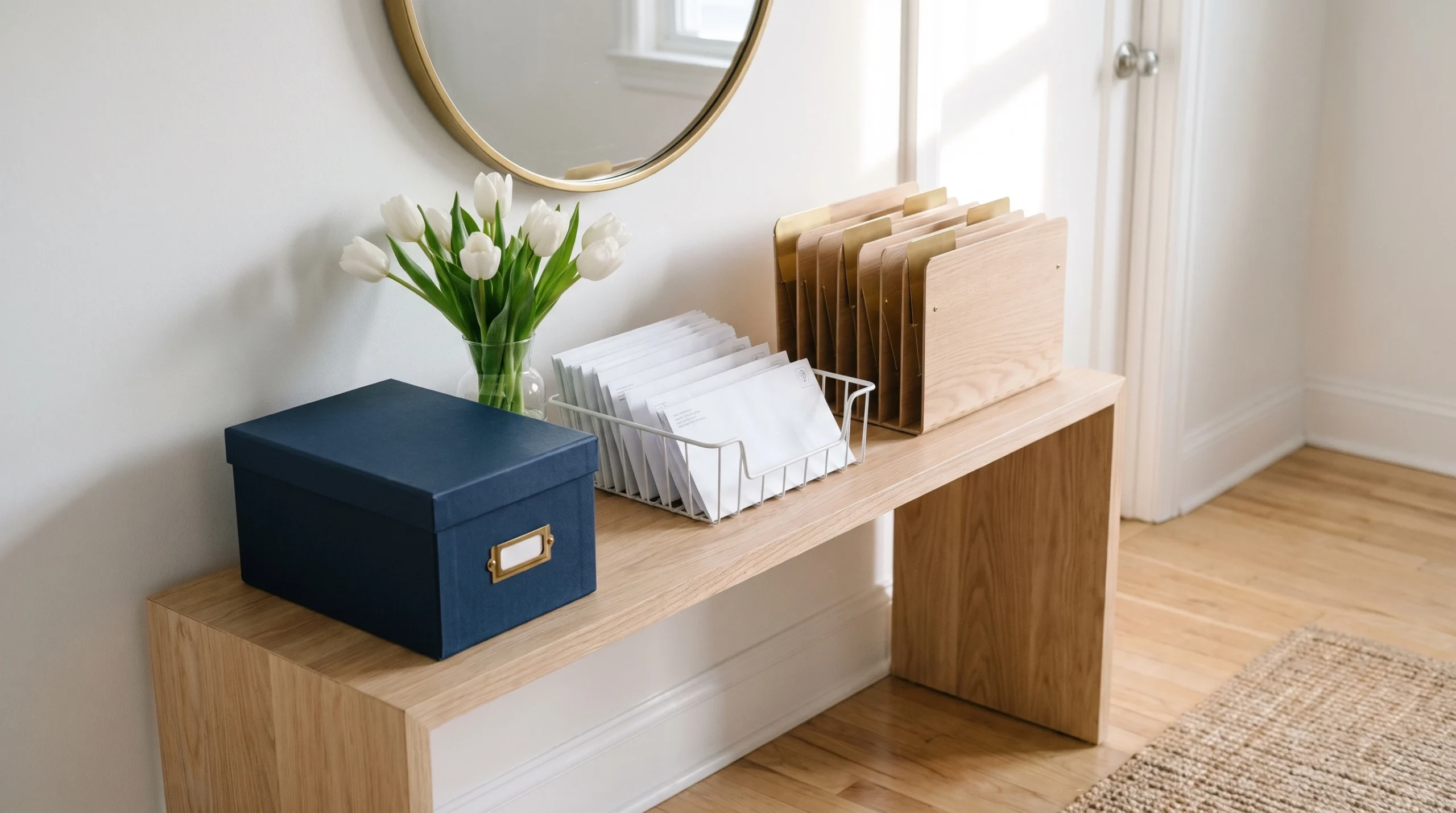
Take two minutes at the door. Put bags where they’ll be grabbed, line up shoes, hang coats, and make sure keys have a landing spot. Add anything that needs to leave the house, like library books, returns, or a signed form. When everything is staged ahead of time, the Monday scramble gets shorter.
Step 6: Look at the Week and Pick Three Priorities

Finish by sitting down for five minutes with your calendar. Note appointments, early mornings, and busy evenings. Then pick three priorities for the week, such as meals to plan, a bill to pay, or one small spot to tackle. Write them on a sticky note and put it where you’ll see it. Three is realistic. Ten is a list you’ll ignore.
What to Do When Your Sunday Reset Doesn’t Go to Plan
Some Sundays will fall apart: someone’s sick, plans pop up, or you’re simply worn out. That doesn’t mean the routine failed. Here are four ways to bend it instead of breaking it.
- Shrink it. With only fifteen minutes, do steps one and five, then stop. Clear surfaces and a staged door still make Monday easier.
- Share it. Give everyone a small job, like gathering their own things or packing their own bag. Keep the instructions simple enough that nobody needs a lecture.
- Move it. If Sunday is full, a Saturday night or Monday evening reset works just as well. The habit matters more than the day.
- Skip it. Take what helps and leave the rest. One missed week doesn’t undo anything, and you can start fresh next Sunday.
Why Decluttering First Makes Every Sunday Reset Shorter
Clutter is often what turns a short reset into a long one. Every extra item on a counter is one more thing to pick up, wipe around, and put away. If your Sunday reset keeps running over an hour, the problem may be too much stuff for the space, not too little effort.
Spend five minutes each week on one small spot, like a single drawer or shelf, and let go of what you no longer use. Sort first and buy storage last, because new bins can’t fix a surplus of things.
If you want a clear path for this, The Home Organization Reset is my PDF guide with step-by-step organizing strategies, decluttering checklists, room-by-room guidance, and simple cleaning and organizing routines. It’s there if you want it. There’s no pressure here, and the free ideas on the blog stand on their own.
Sunday Reset Questions, Answered
How long should a Sunday reset take?
A Sunday reset works well at 30 to 60 minutes. If you only have fifteen, clear the surfaces and stage the entryway, then stop. A short routine you repeat beats a long one you dread, so choose the length that fits your week.
What if I’m busy on Sundays?
Move it. The routine works on any evening, so try Saturday night or Monday after dinner. Even a quick version before bed gives you a head start. Pick the day you’re most likely to repeat every week.
Do I need special supplies or products?
No. A laundry basket, a cleaning spray, a cloth, a timer, and a sticky note cover almost everything above. You don’t need new bins or fancy planners to get started. Use what you already have.
Your Next Small Step Toward a Calmer Monday
Pick one step from this list and try it this Sunday. Maybe it’s the ten-minute clear-off, or maybe it’s just staging the door. Once that feels easy, add another. A Sunday reset doesn’t have to be big to help, and it doesn’t have to look staged. It just has to work for your home, your family, and your week. Be kind to yourself if it takes a few Sundays to find your rhythm, because you’re building a system that fits daily life, and that’s worth more than a spotless weekend.