Home office organization sounds easy until your “office” is the end of the dining table, a corner of the bedroom, or a laptop balanced on the kitchen counter. Papers wander, cords tangle, and by Friday you’re digging under a pile of school flyers for one working pen. You don’t need a spare room or a matching set of furniture to fix this. You need a small, steady system that fits the space you actually have. Here are seven ideas that work for tight corners and shared spaces alike.
1. Start Home Office Organization With One Small Zone You Can Claim
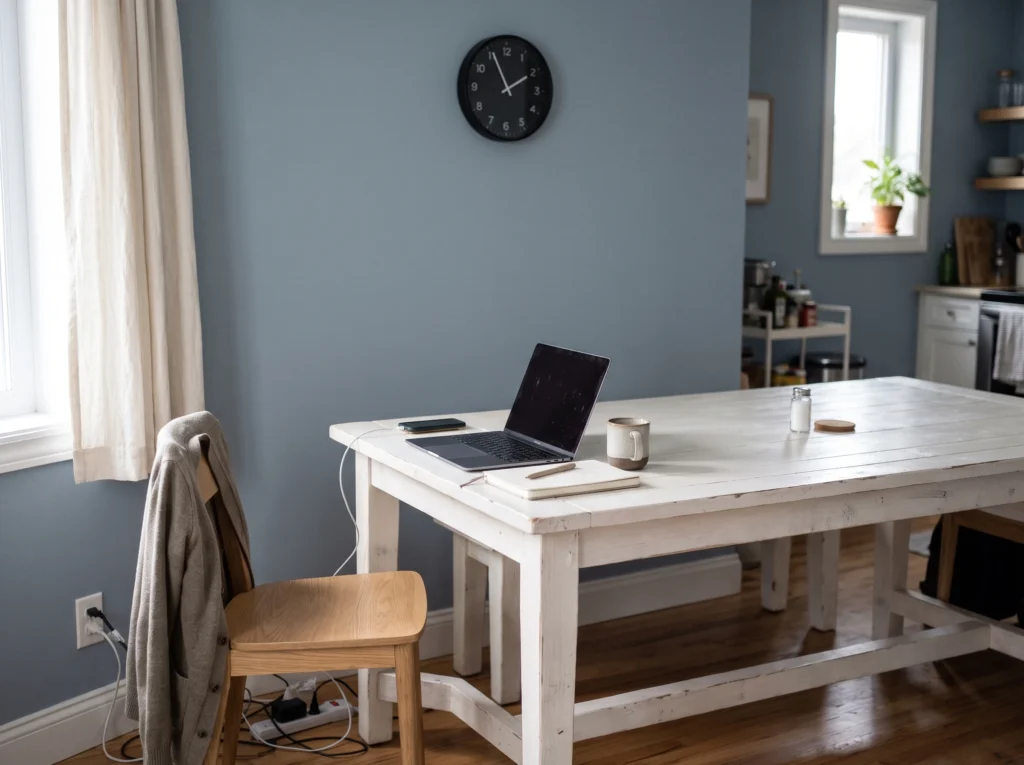
Before you move anything, decide where work really happens. In a small home, it’s usually a corner of a bedroom, a section of the dining table, or a slice of the living room. Pick one and call it your zone, even if it’s only a couple of feet wide.
Stand there for a minute and notice what you reach for most. A laptop, a notebook, a charger, a pen, maybe a mug. Those are your daily items, and they’re the only things that earn a place inside the zone. Everything else can live somewhere else.
If the space is shared, say so out loud. Something like “this end of the table is mine until three” saves a lot of tension. A zone everyone understands is easier to keep clear, and it makes home office organization feel like a household habit instead of a solo chore.
2. Declutter the Desk Surface Before Buying Any Storage
Clear everything off the surface and sort it into three piles: keep here, keep elsewhere, and let go. Be honest about dried-out pens, mystery cables, and the stack of “someday” papers.
I tried the pretty approach first. I bought matching containers before I’d decluttered anything, and they looked lovely for about a week, then just held more of the same clutter. I returned most of them.
So sort first and buy storage last. Once you can see what’s left, you’ll know exactly how much room you need, and it’s usually less than you expected. Home office organization gets cheaper and calmer when the pile shrinks before anything gets bought.
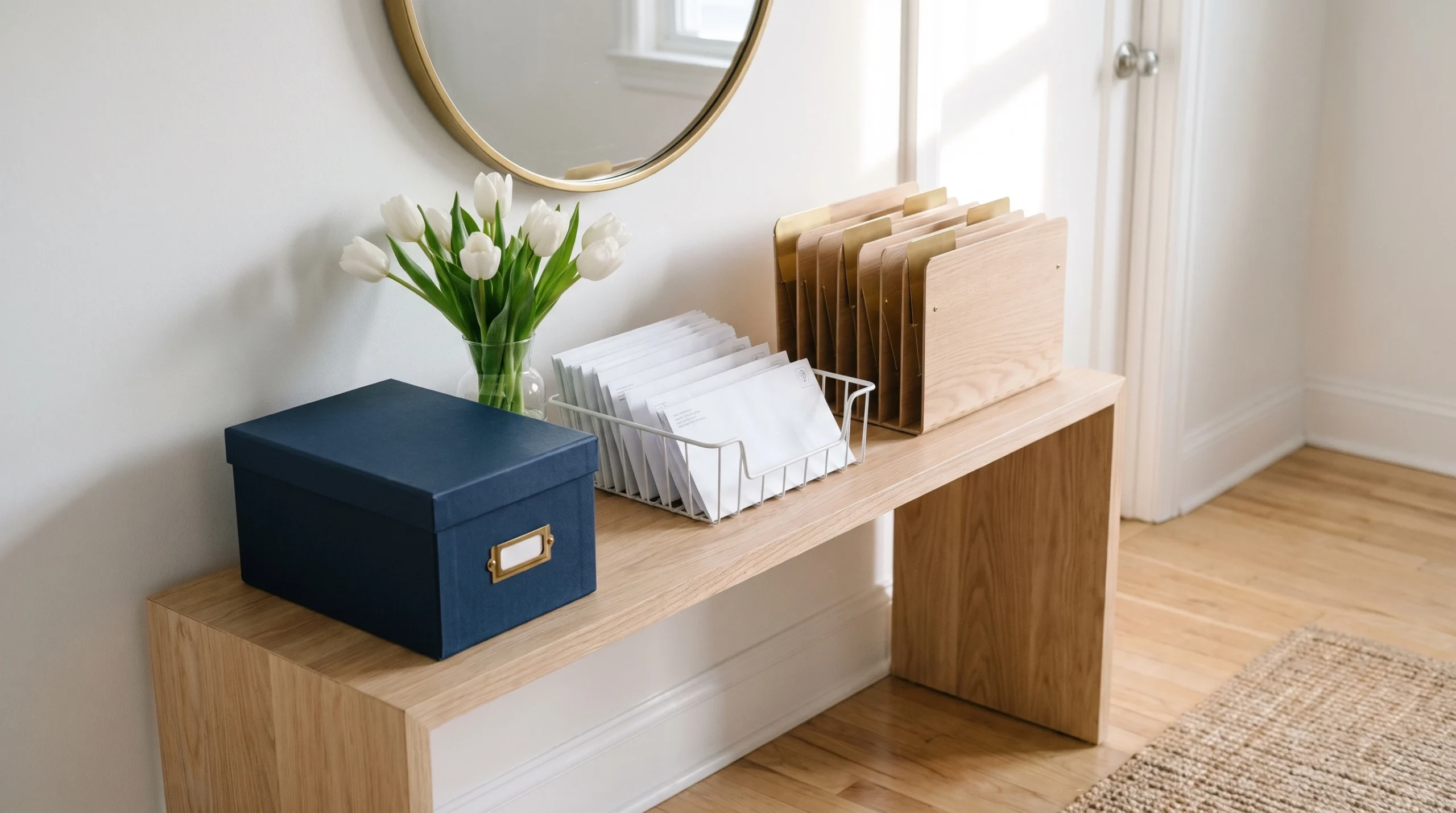
3. Give Every Paper, Cable, and Supply a Small Spot
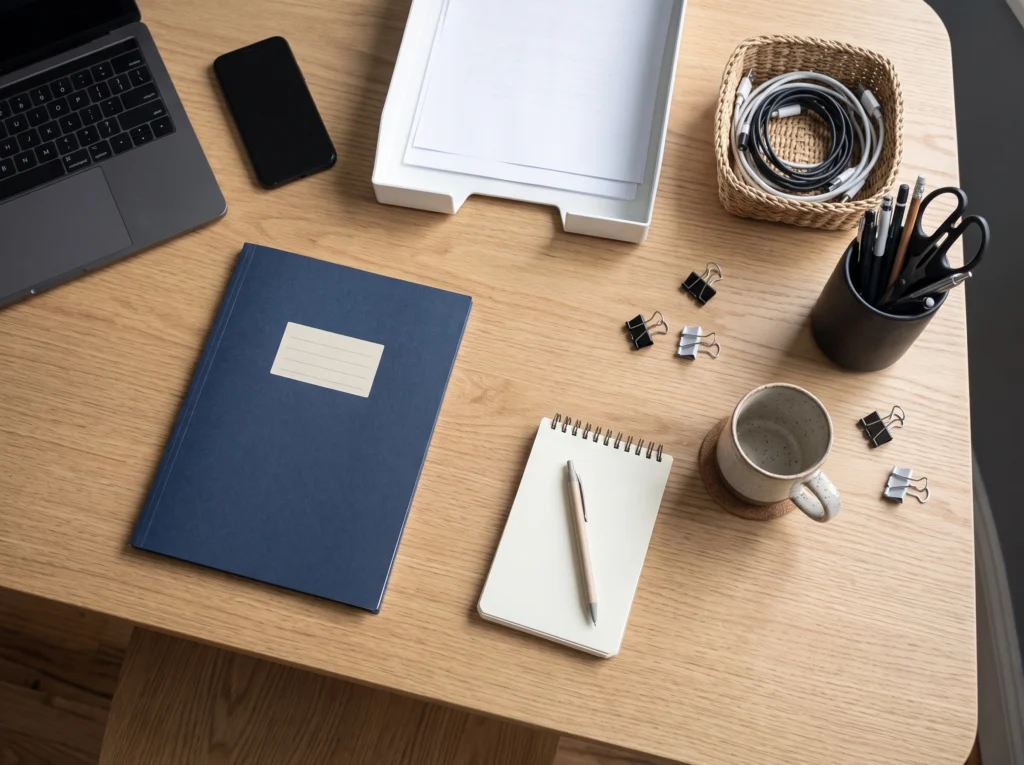
Every item needs a home, or it ends up on the nearest flat surface. In a tiny workspace, those homes can be very small. Think of it as a home for the things we use every day, scaled down to fit a corner.
Here’s a simple starting set:
- One tray for incoming paper. Anything new lands here, and nowhere else.
- One folder for “needs action.” Bills, forms, and permission slips go in so they stop floating around.
- One small basket or shoebox for cords and chargers. Binder clips on the desk edge keep cables from slipping behind it.
- One cup for pens and scissors. That’s the whole supply department.
If paper is your biggest pile, these paper clutter solutions and a simple home filing system can help you decide what to keep and where it should go. Use only what makes home office organization easier for you, and skip the rest.
4. Use Vertical Space for Home Office Organization in Tight Corners
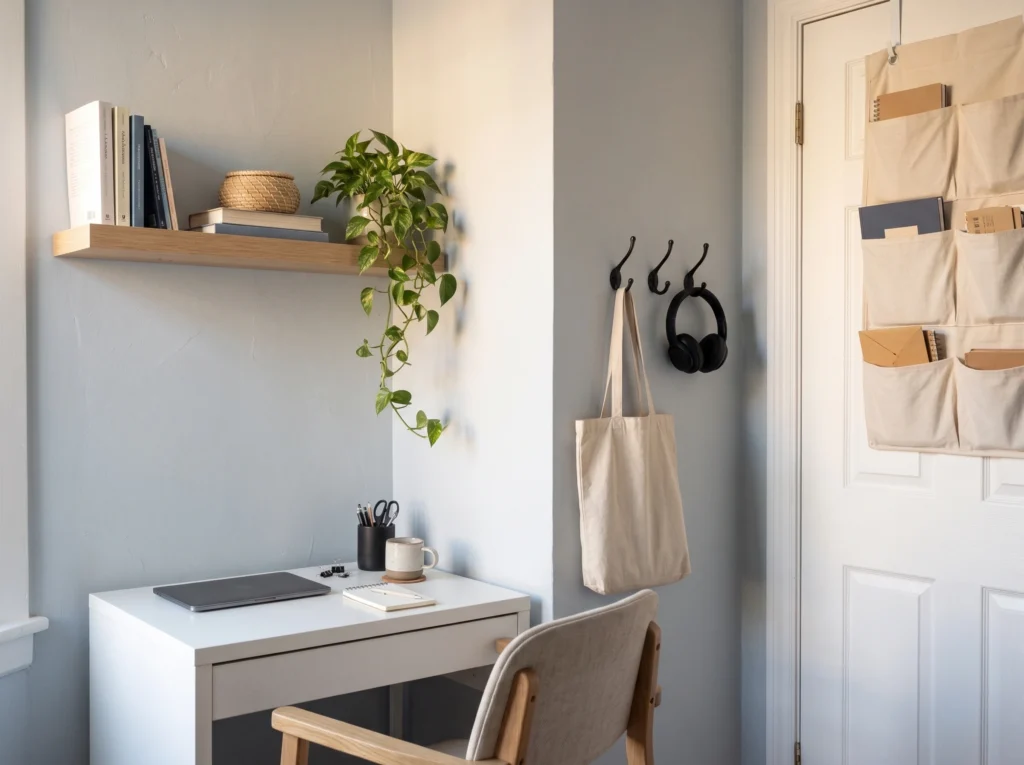
When the floor is spoken for, look up. A single wall shelf above a desk can hold a few books, a basket for supplies, and a small plant without taking any surface space at all. A row of hooks beside the desk can hold a bag, headphones, or a tote of work papers.
A few more places to borrow from:
- The back of a door. A hanging organizer holds notebooks, envelopes, and chargers neatly out of sight.
- A slim rolling cart. Tuck it beside the desk, then roll it into a closet when the workday ends.
- A shallow closet. If you have one with a little room, a narrow shelf and a chair can become a small, closable workspace.
The goal isn’t to fill every wall. Choose one vertical spot, add one container, and stop. Leaving some blank space keeps a small corner from feeling crowded.
5. Set Up a Shared Space That Packs Away in Two Minutes
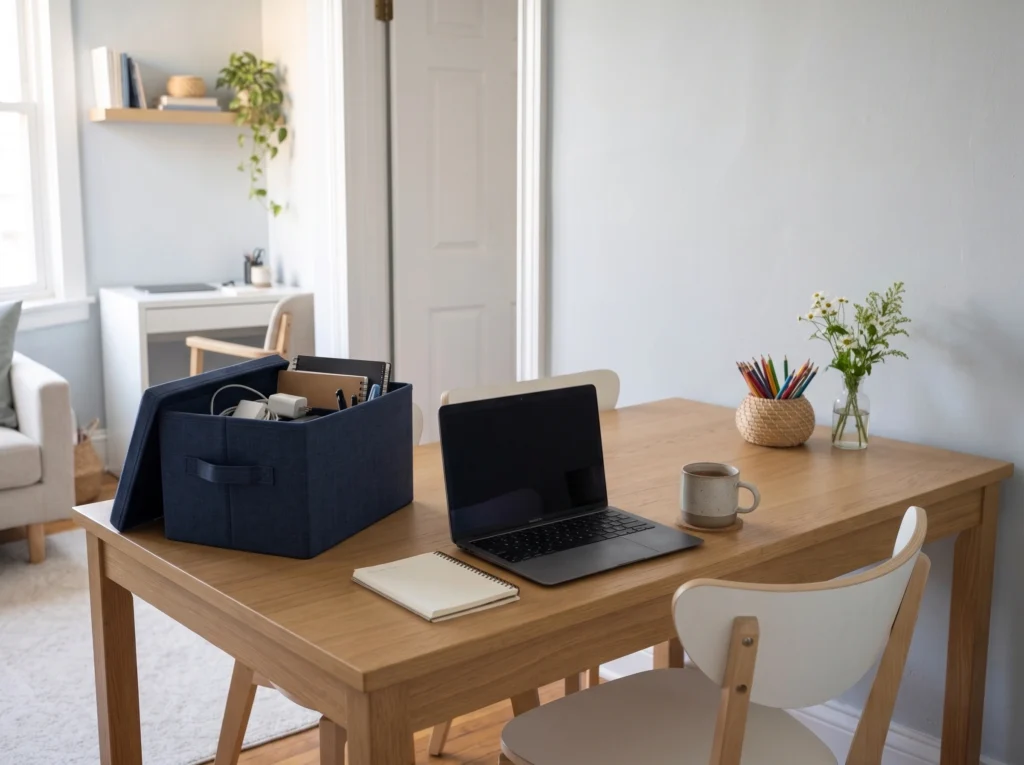
If you work at the dining table or on the couch, your best friend is a “work kit.” Use one lidded box, bin, or tote that holds your laptop, charger, notebook, and pens. When work starts, the kit comes out. When work ends, everything goes back in and the table is a table again.
It also helps to know who needs the space and when. A quick written schedule keeps shared spaces from turning into daily negotiations. The Daily and Weekly Planner Set is one simple way to map out your workdays, the household’s needs, and the small tasks that keep a shared space running.
If other people use the same area for homework or hobbies, give them their own box or basket too. Everyone has a spot, and nobody has to feel like their things are in the way. This is the heart of home office organization in a small home: a space that can change roles quickly without leaving a mess behind.
6. Finish Each Workday With a Quick Reset
A short end-of-day reset does more than any weekend overhaul. Set a timer for two or three minutes and do the same few things every time:
- Put loose papers into the incoming tray or the action folder.
- Return pens, cords, and chargers to their spots.
- Carry mugs and plates to the kitchen.
- Wipe the surface with a cloth.
- Write tomorrow’s top three tasks on a sticky note.
That last step is a quiet gift to your morning self. You sit down tomorrow with a clear surface and a clear first move. If you only keep one habit from this post, this is the one I’d choose, because it protects every other part of your home office organization without taking more than a few minutes.
7. Keep Your Home Office Organization Going With a Weekly Check-In
Even the best system drifts a little. A short weekly check-in catches the drift before it turns into a pile. Pick a regular time, maybe Friday afternoon or Sunday evening, and give it about ten minutes.
Empty the incoming tray, file or toss what’s inside, and check the action folder for anything due soon. Look at your supplies and remove what’s dried out or broken. Then scan the zone and ask one question: does everything here still earn its place?
If you’d like more structure for the rest of the house too, The Home Organization Reset is my step-by-step PDF guide with decluttering checklists, room-by-room guidance, and simple routines. There’s no pressure here, and the ideas in this post work on their own. If something doesn’t fit your life, take what helps and leave the rest.
Common Questions About Organizing a Small Workspace
How do I organize a home office when I don’t have a spare room?
Home office organization without a spare room starts with one defined zone and one portable work kit. Pick a corner or a section of a table, keep only daily items there, and store everything else in a box, a drawer, or a closet. A zone that packs away quickly works even in a studio or a shared living room.
What should I keep on my desk every day?
Keep only what you use daily: your laptop, a notebook, a pen cup, and maybe one small item that makes the space pleasant, like a plant or a favorite mug. Papers, spare supplies, and extra cables can go in a tray, a drawer, or a basket nearby. A clear surface is easier to start working on and quicker to reset.
How do I keep a shared workspace from becoming a dumping ground?
Give the space a clear purpose and a clear end-of-day reset. A single tray for stray items, a box for each person, and a two-minute tidy at the end of the day keep things from piling up. If someone else needs the area, agreeing on times and giving them their own spot makes the whole thing smoother.
Your Next Small Step for a Calmer Workspace
You don’t have to do all seven ideas this week. Choose the one that sounds easiest, maybe claiming your zone or setting up a work kit, and try it for a few days. Small changes tend to stick when they fit the way you already live.
Home office organization doesn’t have to look like a magazine photo. It just has to help you sit down, get your work done, and close the laptop without leaving a mess behind. Start with one small spot, and let the calm build from there.